
INTERVIEW: CRAIG MANN – THE POWER OF STORYTELLING IN EXHIBITION DESIGN
Greenway Associates is delighted to speak with Craig Mann, founding partner of Studio MB, one of the UK’s leading multidisciplinary exhibition design studios. Alongside fellow founding partner Charlie Barr, Craig has spent over two decades crafting immersive visitor experiences that go beyond the simple display of objects. At the heart of Studio MB’s philosophy is a belief that every exhibition has a story to tell, and that designers have a vital role to play in shaping it.
Craig believes that strong storytelling not only enhances the visitor experience but also adds value for clients, helping their vision reach its fullest potential. In an age where many exhibitions risk becoming mere displays, Craig shares why narrative is the difference between a display that is forgettable and one that is truly transformative.
Craig Mann, Studio MB
GA: Craig, what first drew you to the world of exhibition design, and at what point did you realise that storytelling could be the core of your work?
Craig:
Soon after Studio MB was formed, we were invited to tender for an exhibition called Nicholas & Alexandra, The Last Tsar and Tsarina at the National Museum of Scotland, which we went on to win and deliver. It was a light bulb moment for us. Our response created a series of theatrical style sets that invited visitors to journey through time, revelling in the pomp and opulence, before being introduced to a genuine, loving young family and discovering their plight.
We learnt in this first exhibition that the amazing artefacts on display were windows to the people who owned them or interacted with them. The storytelling introduced the key characters, the events that would unfold as the Russian Empire underwent a series of revolutions and the emotional connection to the fate of those same key individuals.
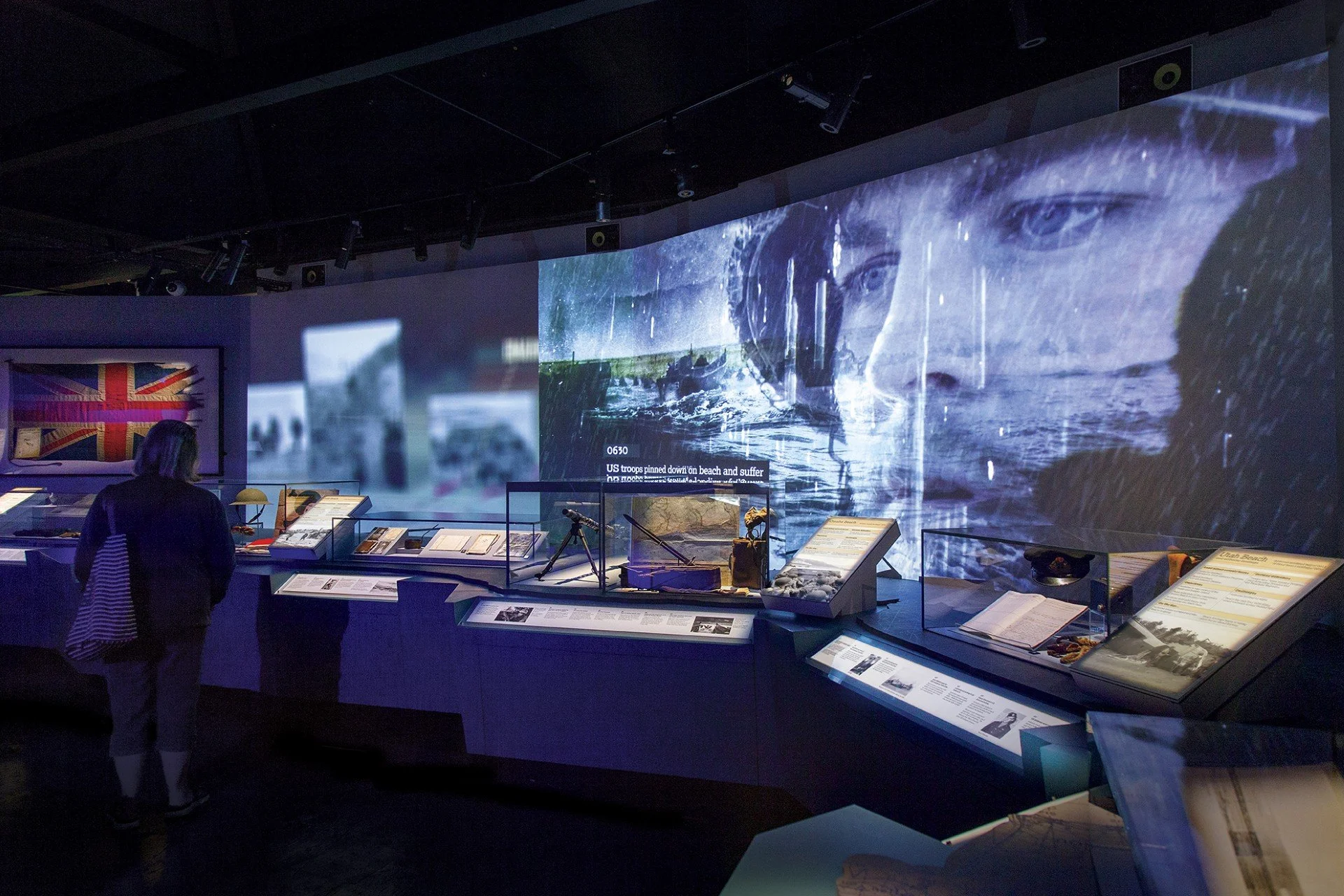
The reaction of audiences who came to see that show and many more that followed, showed us that exhibition design worked best when we treat it like stage design and script it like a play. However, unlike in a theatre where the audience is seated, we invite our audiences up onto the stage, to walk around and between the actors and the scenes.
GA: Many clients approach an exhibition with a brief that focuses on objects or themes. How do you guide them towards thinking about story and narrative?
Craig:
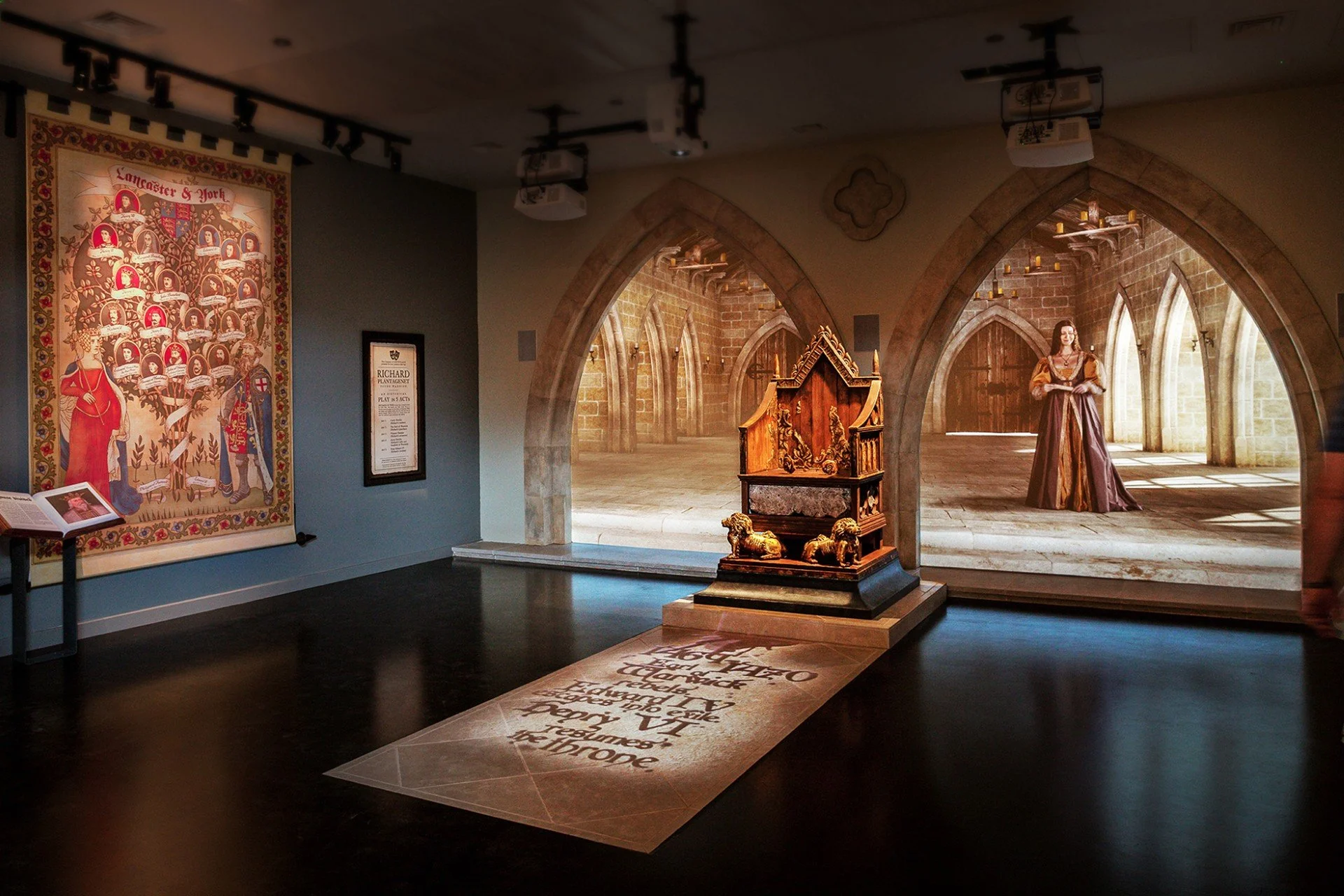
Narrative environments can have thousands of objects, or they can have none at all! For the King Richard III Visitor Centre in Leicester, the only artefact we possessed was the hole in the ground in which Richard’s skeleton remains was found. To understand the significance of finding the lost king, we firstly had to explain who he was and why his story was so important. In this instance, it was the story that people came to see, not the hole! It’s sometimes worth investigating and even challenging a brief by asking how best we can bring new life to the facts and artefacts. Great storytelling is often about creating more connection while the visitor is on site, and more recollection once they have left. To guide clients, we create visual storyboards for each chapter in the visitor journey to communicate and show the experience visitors will encounter. The same technique is used later in the project when AV Media deliveries will be storyboarded.
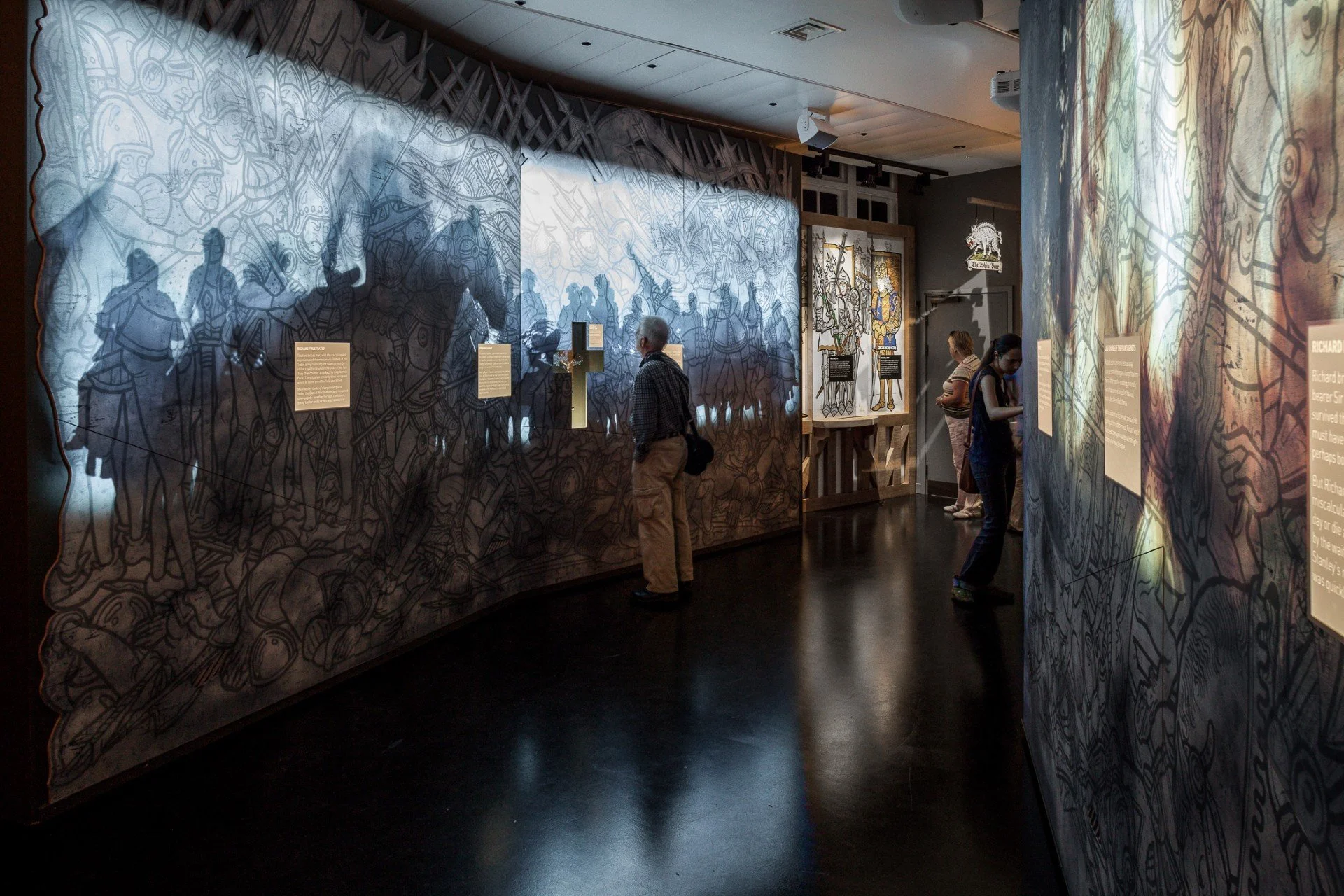
King Richard III Visitor, Leicester
GA: Why is storytelling so important for visitors, and what does it add that a traditional display might not?
Craig:
For every one of our projects, we start by examining the story to be told. We then ask how best to sustain visitors’ interest by varying the way that story is delivered. Much like turning the pages of a storybook, each corner of an exhibition reveals a new chapter, allowing the narrative to unfold and evolve. We often talk about creating coherent narrative environments, where the physical spaces, including the floors, ceilings and walls are all used in different ways to harness the story and immerse our visitors in the narrative. Again, using a theatrical term, each section we encounter can effectively act as a scene change. As a studio of storytellers, we pride ourselves on our ability to tell imaginative and emotive stories that inspire, involve and inform. We have come of age, and without doubt the education we have received and interpretive intelligence we have accumulated from every project undertaken over the last 22 years, has made us the award-winning team we are today. We understand how to design and deliver astonishing, narrative lead visitor experiences that bring people together, give joy, and enrich lives.
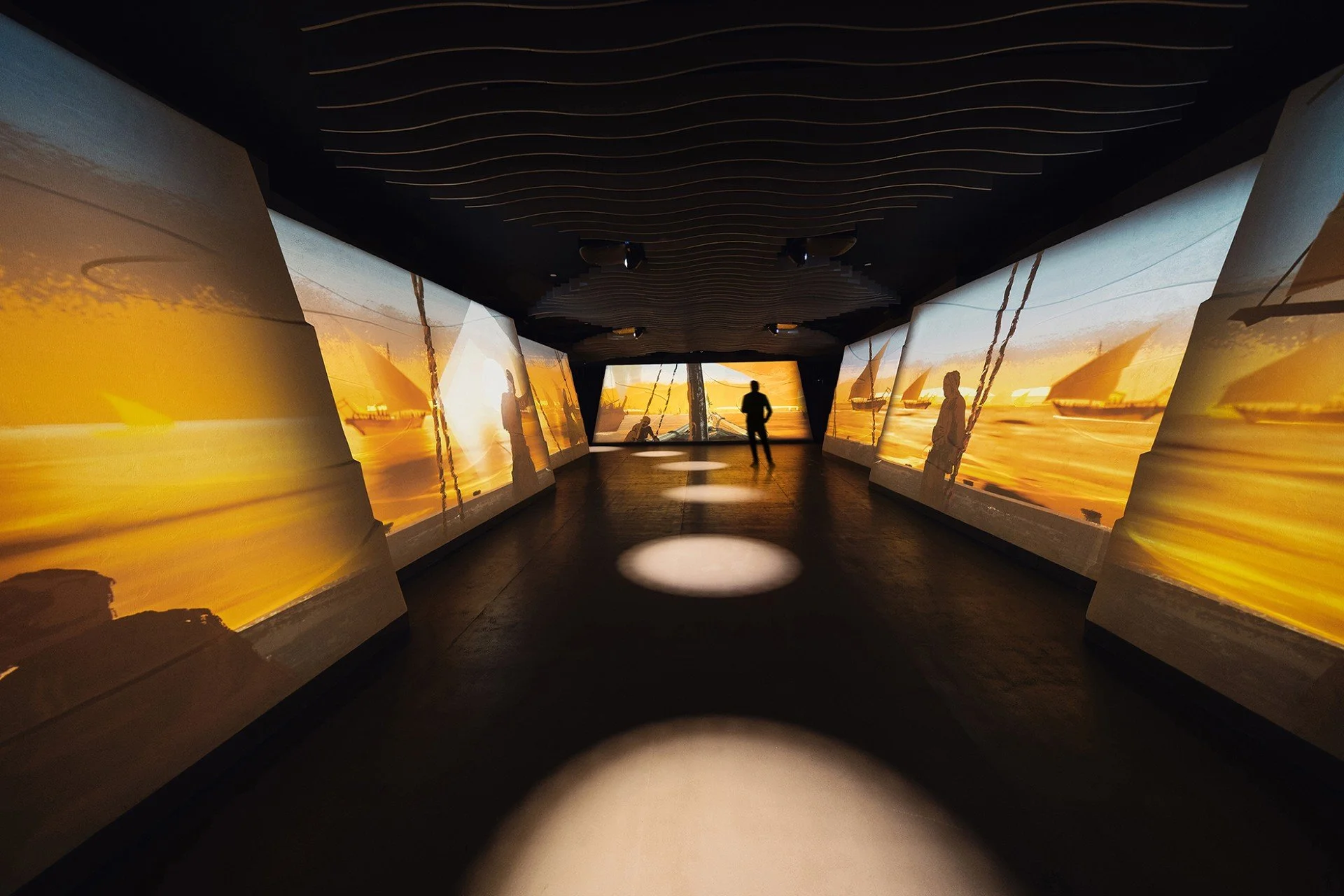
Al Salam Palace, Kuwait
GA: How does storytelling and a strong narative add value for the visitor, and the client?
Craig:
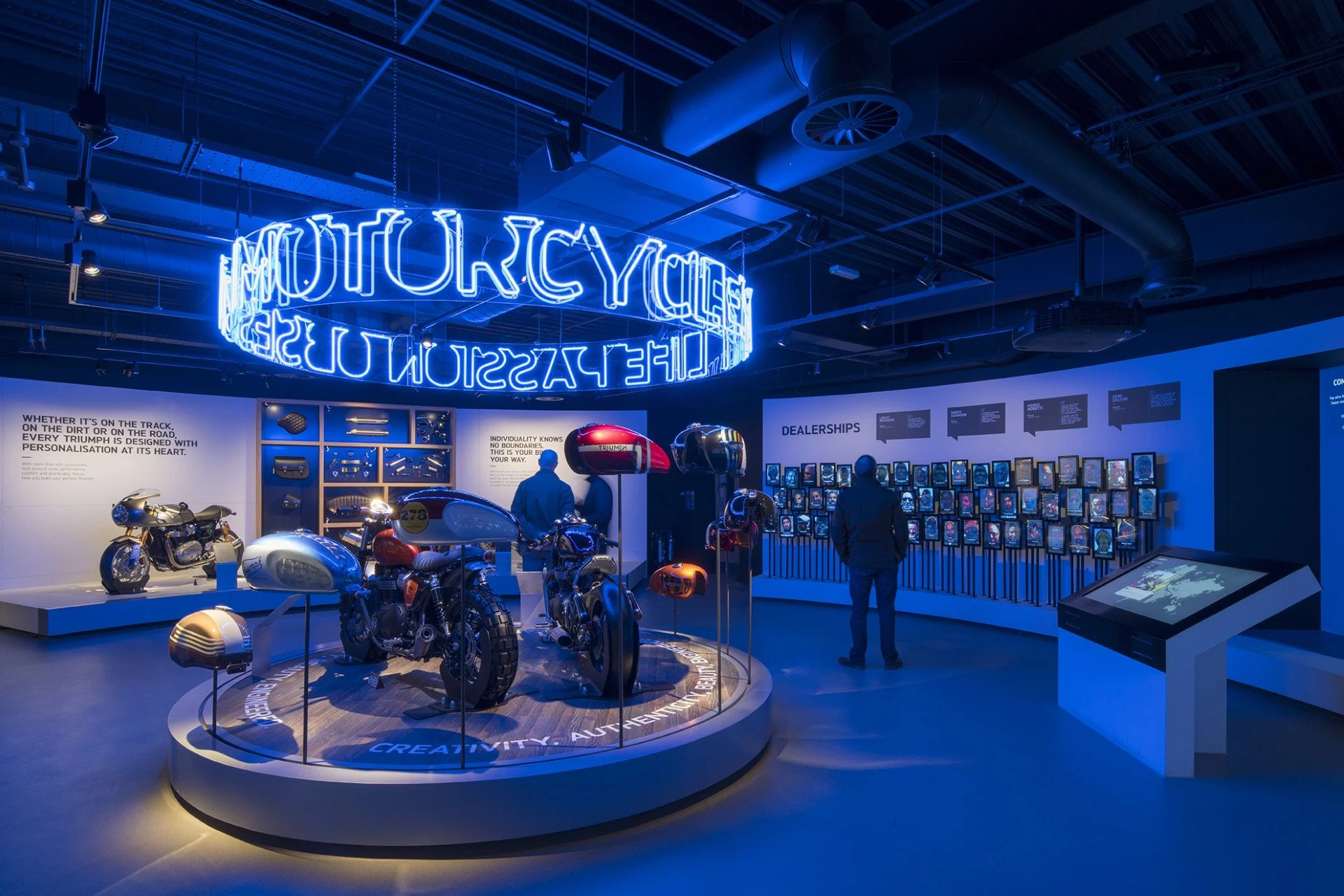
Stories are how we make sense of ourselves and the world. When we listen to a story, our brain does more than process information. Stories can evoke emotions and create memorable connections with an audience. When people feel emotions they are more likely to remember and act on what they’ve heard or seen. We remember good stories and we also want to recount them to our friends and family.
Triumph Motorcycles Experience, Hinckley, Leicestershire
GA: Even major exhibitions sometimes miss the mark in their approach. Why do you think storytelling is often overlooked?
Criag:
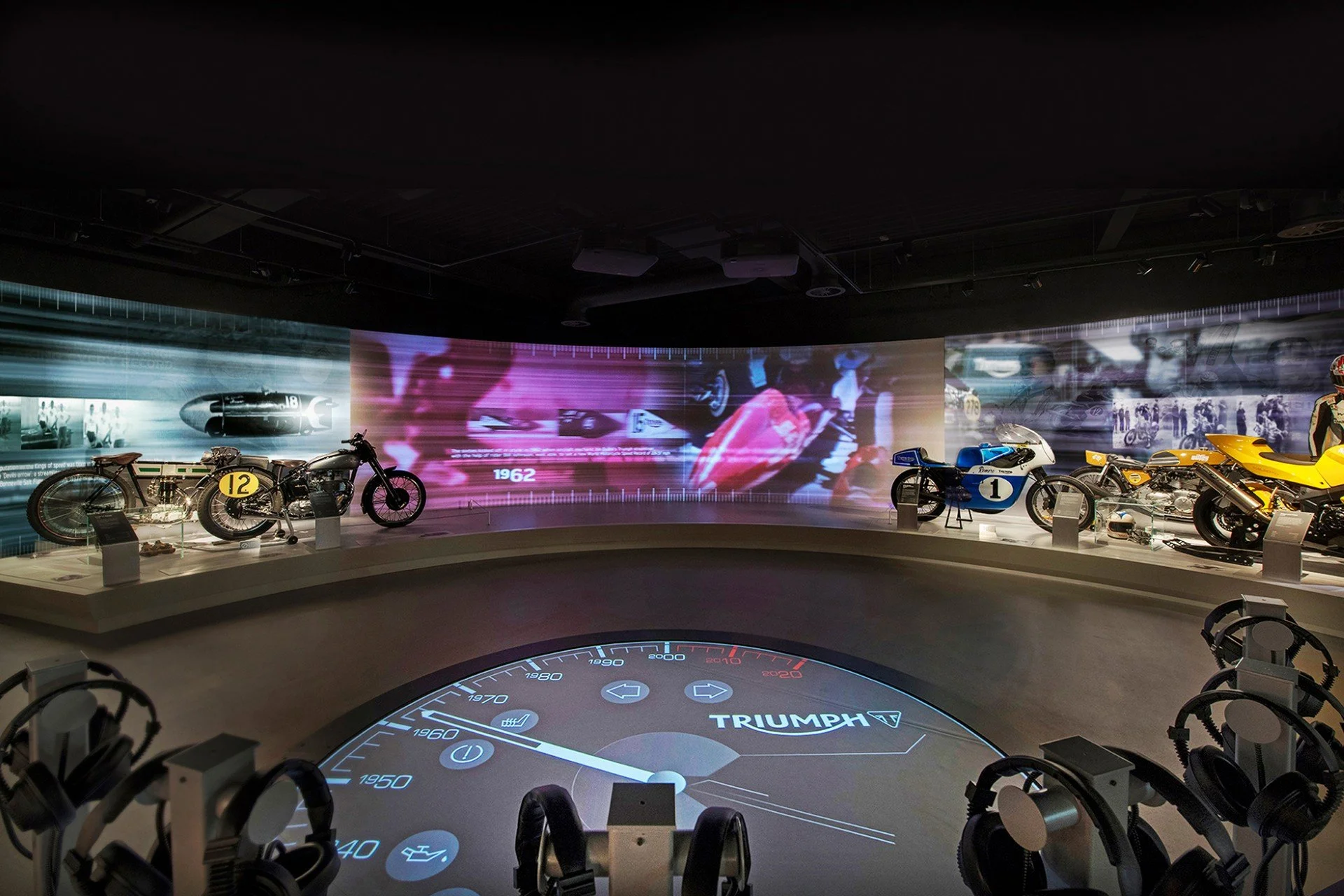
Organisations talk about storytelling when they describe their approach to exhibition design within a cultural or museum location. However, and for whatever reason, many completed projects we have witnessed, become less about storytelling and more about documenting – turning what should be imaginative and emotive encounters, into a chronology of facts. The visitor may indeed learn much from this approach, and if it’s well put together, may even enjoy it, but they will not likely be moved by it, and certainly not changed by it. We are very often asked to present important stories within unique spaces to create an absorbing and unfolding journey. And perhaps ‘journey’ is the key word as we think about a telling stories. We like to think our approach to storytelling, takes the visitor on a journey – a journey through lives and times, but also a physical journey, an intellectual journey, and indeed, an emotive journey.
Triumph Motorcycles Experience, Hinckley, Leicestershire
GA: Given Studio MB works internationally, how do you adapt storytelling for different audiences in the UK, Europe, or the Middle East?
Craig:
We’ve been fortunate to create exhibition experiences in locations that range from Dublin to Delhi, from Reykjavik to Riyadh, and from Glasgow to Guangdong! We are very aware museum visitors are all types, all ages, all races, all religions, and from all over the world. They arrive with different lived experiences and attitudes to the stories we are telling. Yes, they may come to encounter histories of a dramatic time long past, but our job is often to not only draw out the universal human nature of the stories being told, but make sure we harness the powerful and palpable relevance these stories have with people and events of more recent times that remain embedded in the living memory.
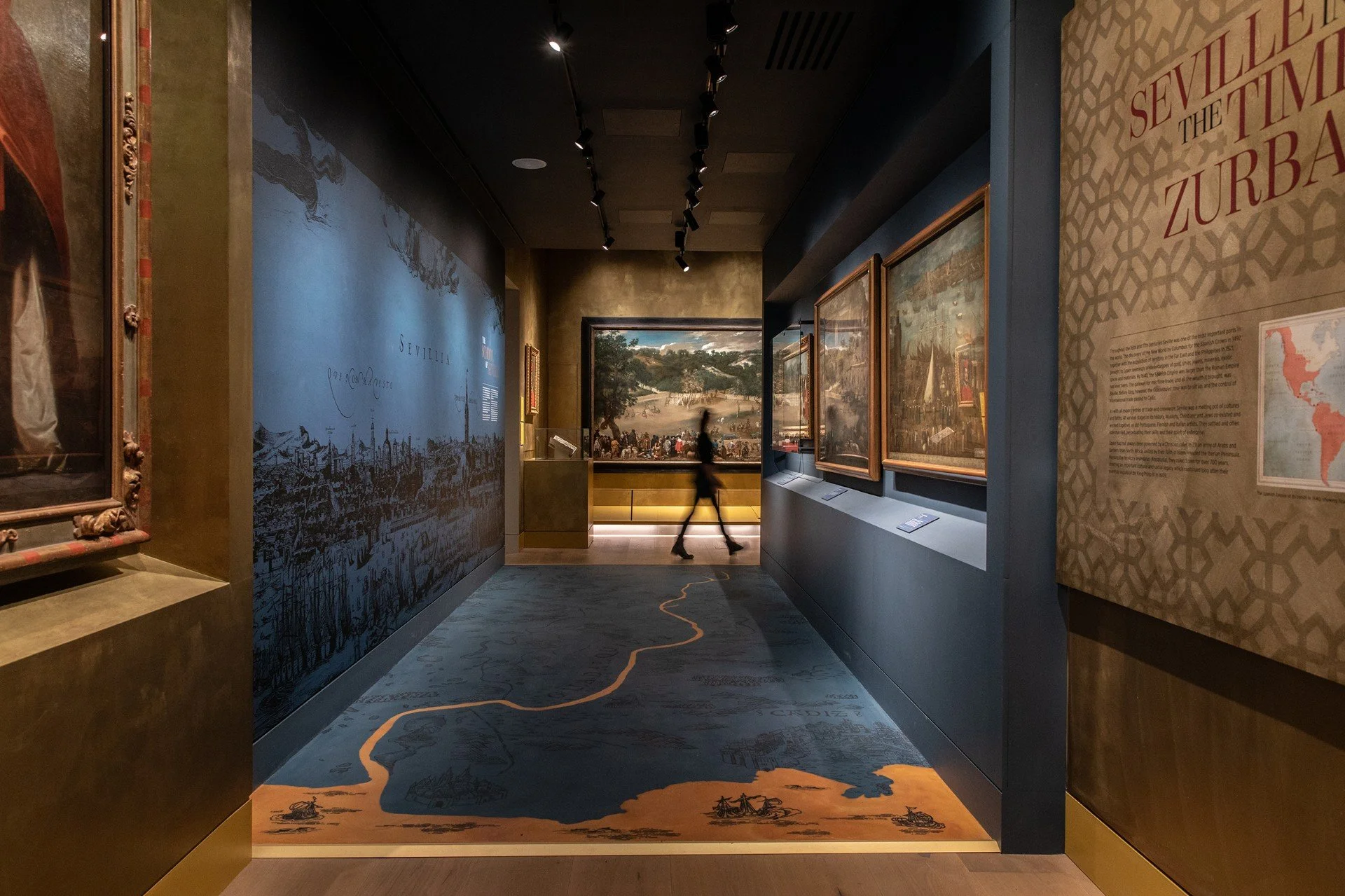
The Spanish Gallery, Bishop Auckland
GA: Looking at your portfolio, which project are you most proud of for how it tells a story? What challenges did you face, and how did the narrative guide design decisions?
Craig:
Just before the Covid-19 crisis, we began work on The Spanish Gallery, a new museum showcasing an impressive collection of Spanish art. Set within a former Victorian bank building and an adjacent school, the visitor is taken on a physical journey through a series of rooms, levels and cavernous spaces. Along the way, the story of the Golden Age of Spanish art unfolds, tracing its development from its early origins in Seville to the Royal Court in Madrid, while revealing and interpreting its hidden layers of meaning. The result is a series of striking juxtapositions: a giant half-silvered mirror that sequentially reveals the narrative within Velázquez’s Las Meninas; panelled rooms carved with secret motifs; and floating rooms of voile, before visitors finally enter an eight-metre-high, balconied hall filled with sculptures, monumental paintings and altarpieces. It’s an incredibly theatrical experience.
GA: Finally, what advice would you give to emerging designers or studios looking to specialise in narrative-led exhibition design?
Craig:
Drop us a line or call us! Let’s collaborate.