
SPOTLIGHT ON: EXPO 2025, OSAKA, JAPAN
Earlier this year, Jared Mensah from Greenway Associates, travelled to Japan to attend Expo 2025 Osaka, Kansai, Japan. Hosted from 13 April to 13 October 2025 on the artificial island of Yumeshima, the Expo brought together global experts to explore how we can shape better ways of living in the future. The official theme was “Designing Future Society for Our Lives” asking a fundamental question: How do we want to live, and how must society evolve to support that? This overarching theme was supported by three clear focus areas - Saving Lives, Empowering Lives, Connecting Lives.
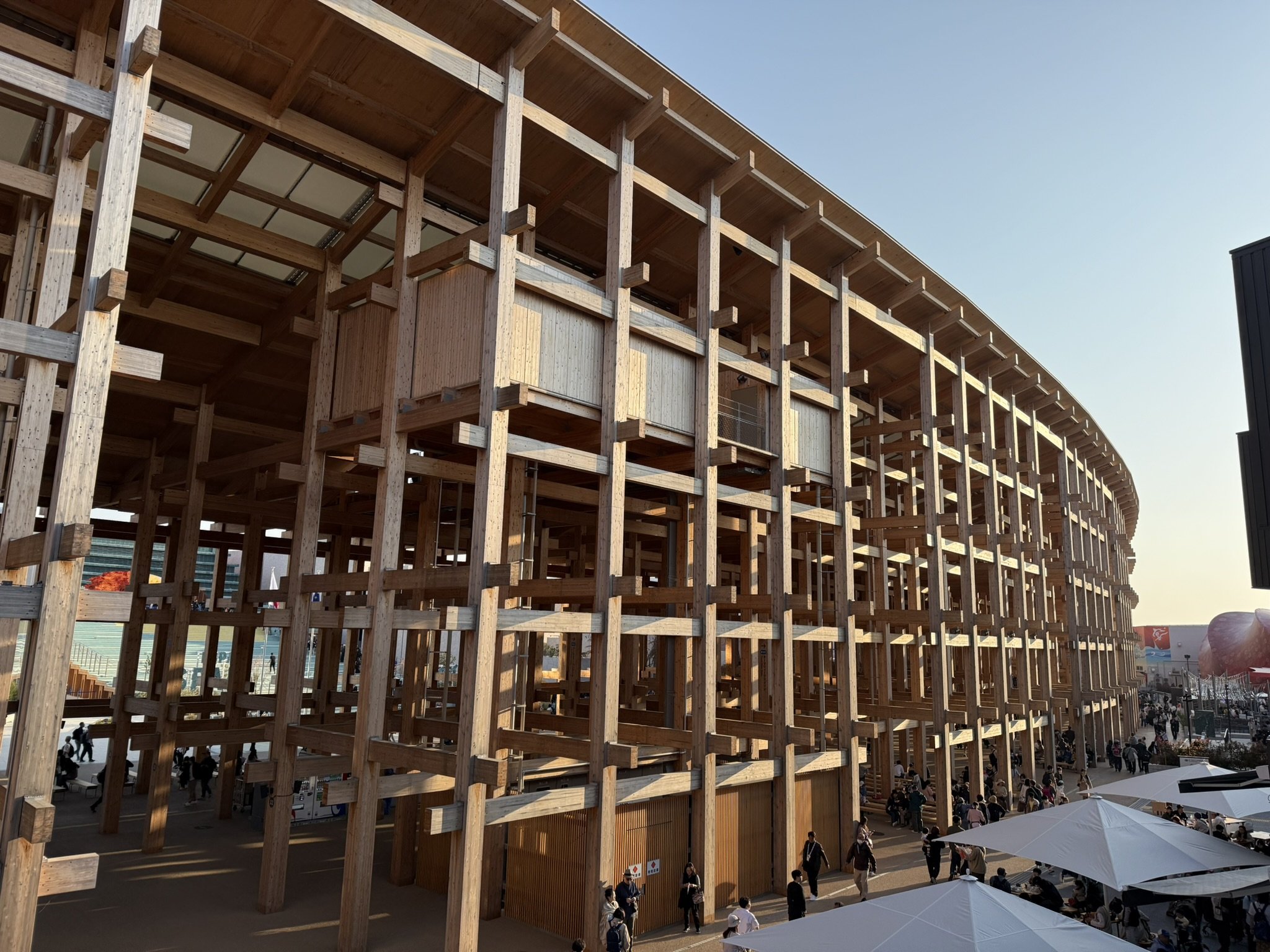
The Grand Ring at Expo 2025, designed by Sou Fujimoto
A Global Celebration of Ideas
With over 150 nations and multiple international organisations represented, Expo 2025 offered a rich programme of exhibitions, technology showcases and cultural conversations. Topics ranged from sustainability and innovation to accessibility, mobility and community wellbeing. This all highlighted the shared challenges and opportunities that shape our collective future.
Spread across 155 hectares on the artificial island of Yumeshima, Expo 2025 unfolded on an impressive scale. At its centre stood the Grand Ring — a vast circular timber structure designed by Sou Fujimoto, stretching nearly 2 kilometres in circumference and covering 61,000 m². This monumental ring connected a diverse array of national pavilions, from sculptural architectural statements to multi-storey cultural hubs. Although Japan’s planning began years earlier, real momentum accelerated in 2023, leaving participating nations with less than two years to design and construct their pavilions. The Grand Ring served not only as the Expo’s defining architectural symbol but also as an elevated walkway, guiding visitors around the entire site.
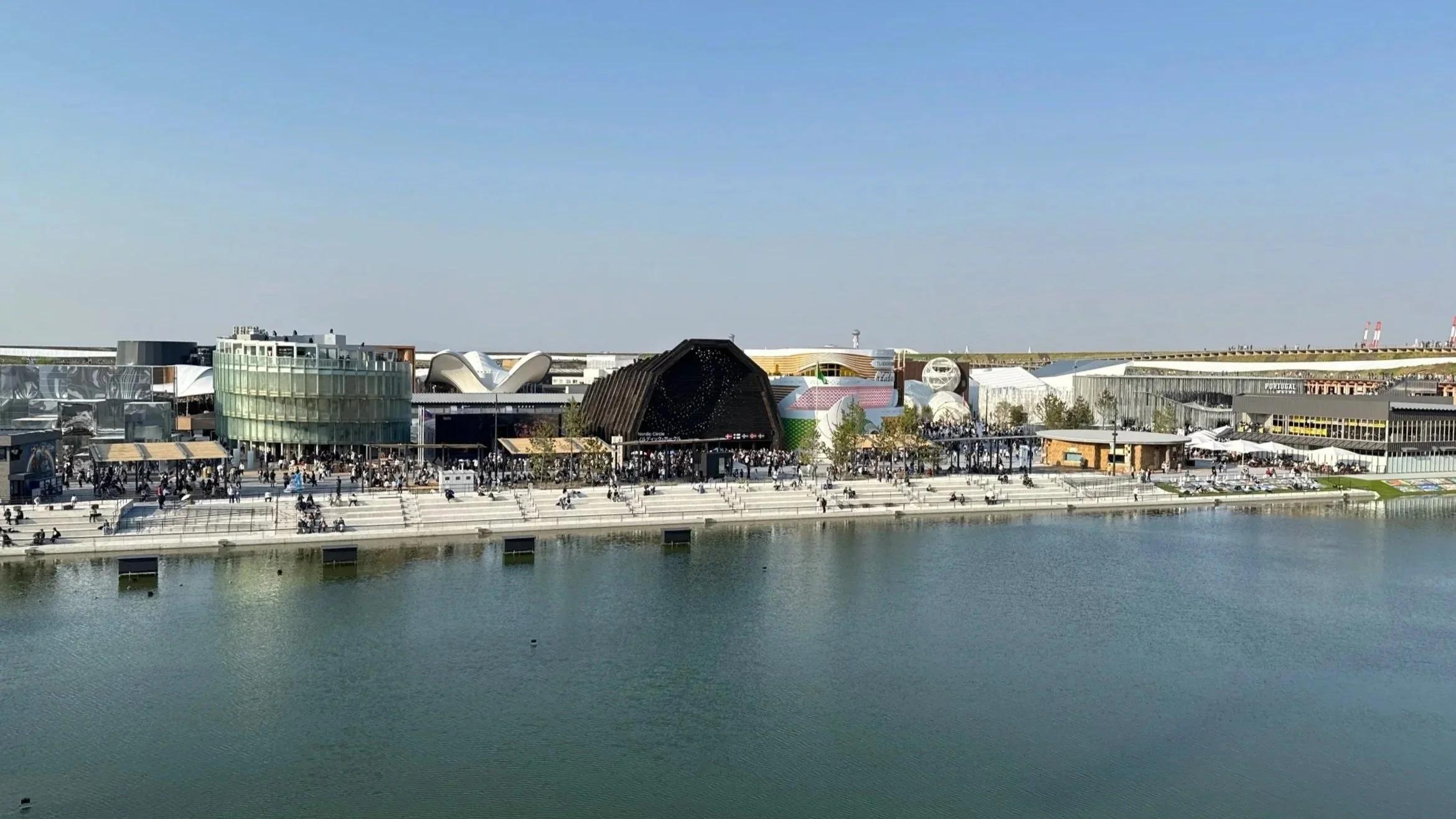
Expo 2025 was held on the artificial island of Yumeshima.
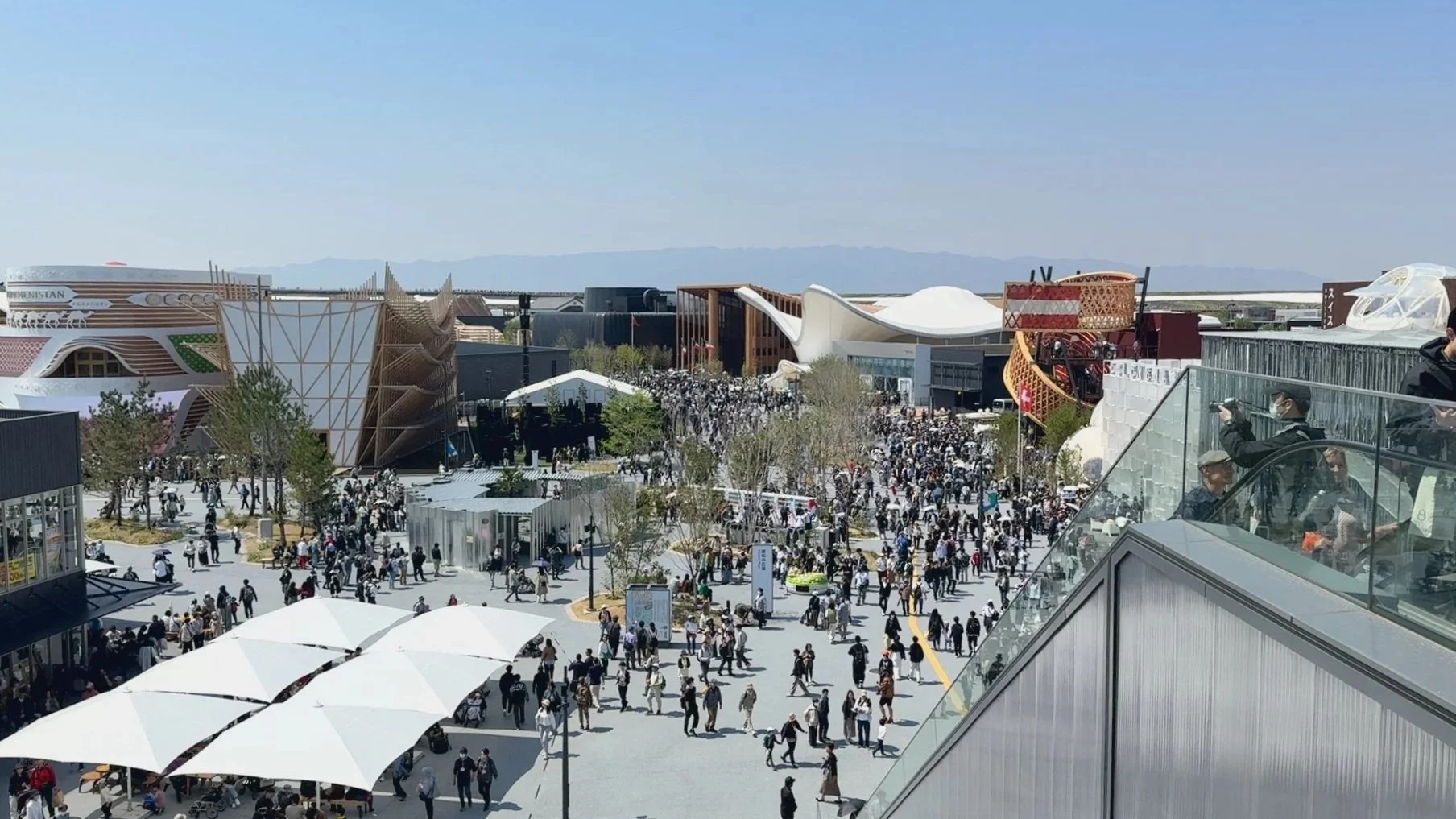
Expo 2025, Osaka, Kansai, with the Rokko Mountain Range in clearly visible across the bay from Yumeshima.
Visitors had a variety of practical transport options, including the Osaka Metro Chūō Line to Yumeshima Station and shuttle buses from major hubs. Tickets were tiered, with standard adult entry at ¥7,500, discounted rates for children and youth, and weekday or evening passes for off‑peak visits. On peak days, attendance reached around 200,000 visitors, with total admissions surpassing 16 million by mid‑July 2025. Accommodation across the Kansai region was plentiful, though hotels often ran at high occupancy, making early planning essential for those attending.
The Expo was carefully designed to handle large crowds without congestion. Clear signage, well-lit pathways, escalators, railed stairways and ramps guided visitors smoothly through the site. Comfort and accessibility were key priorities, with shaded resting areas, rooftop terraces, cafes and hospitality zones offering spaces to relax, enjoy refreshments, and take in views. Families and visitors with mobility needs were fully accommodated, ensuring the experience was welcoming, efficient and enjoyable for everyone.
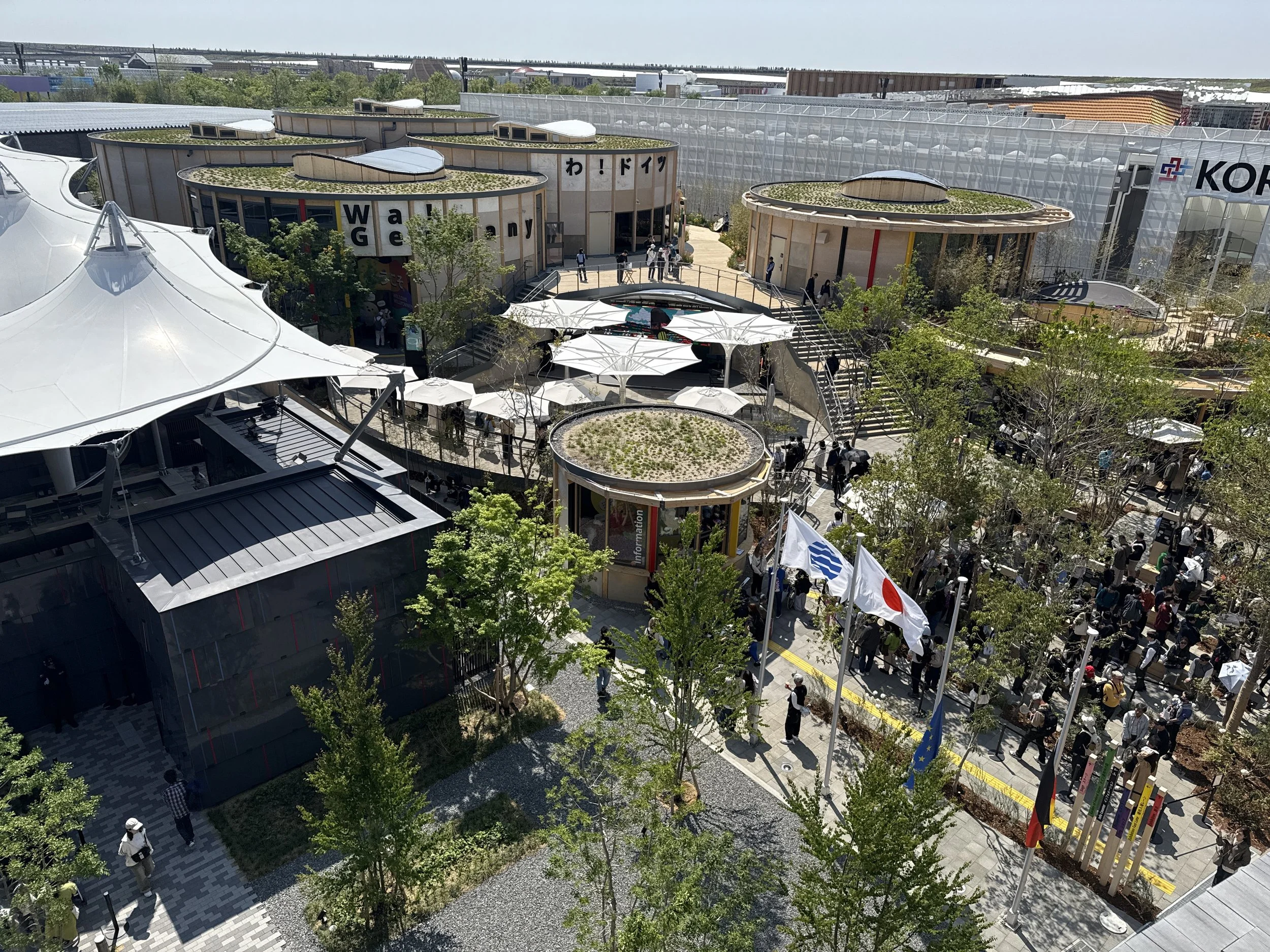
Well designed flow amidst various Pavilions, including shady areas and Information booths.
Notable Pavilions & Architecture
Across its pavilions and masterplan, the Expo showcased how architecture can:
adapt as society changes
enhance sustainability from design to long-term operation
centre visitor experience, accessibility and storytelling
embrace technology to broaden access to culture
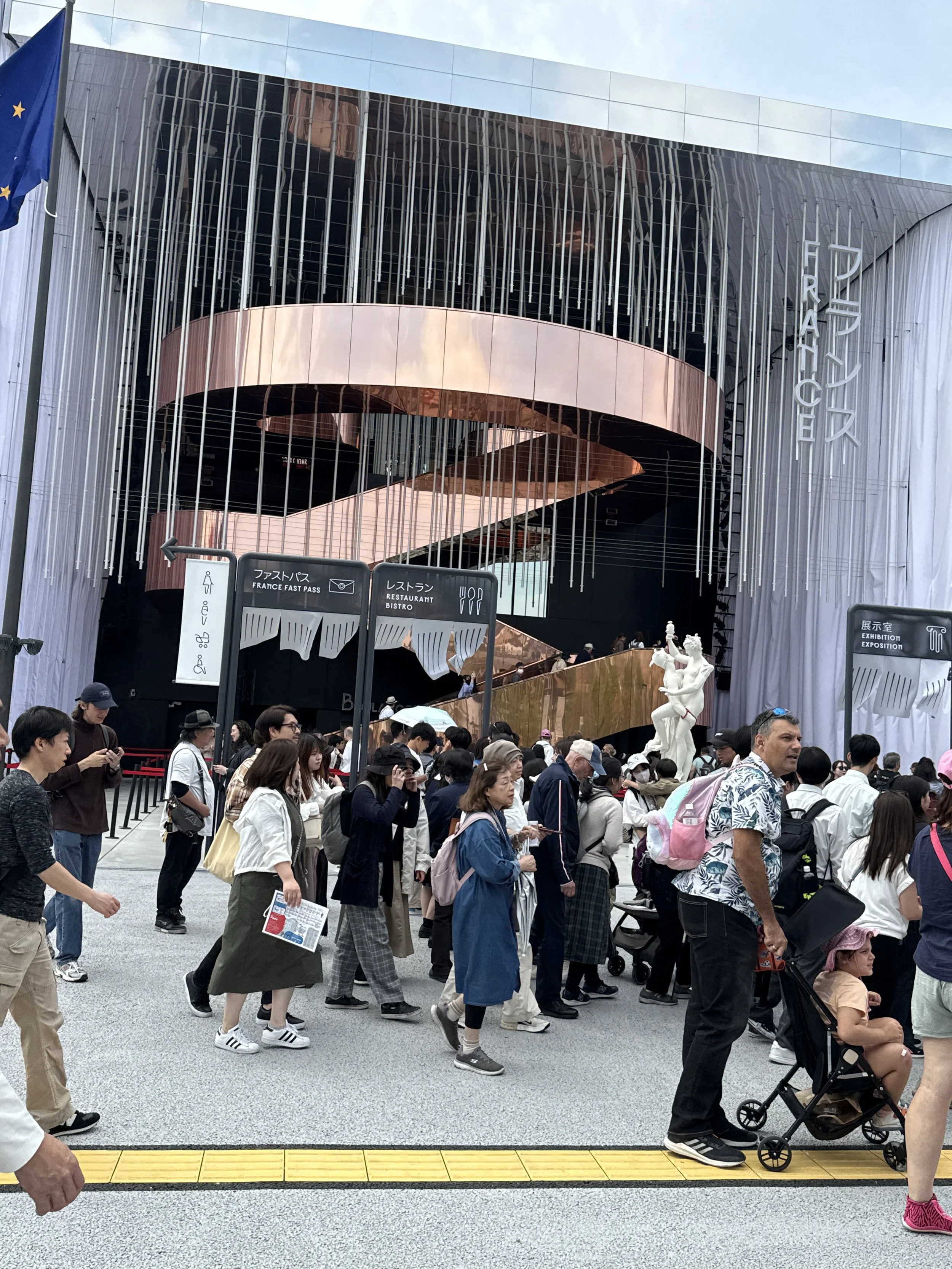
With over 150 nations being represented, it was difficult to visit them all! But some of Jared’s favourite national pavilions included Thailand, Kuwait and the UAE. He was also drawn to the Commons Pavilions, each of which combined multiple countries under a single roof.
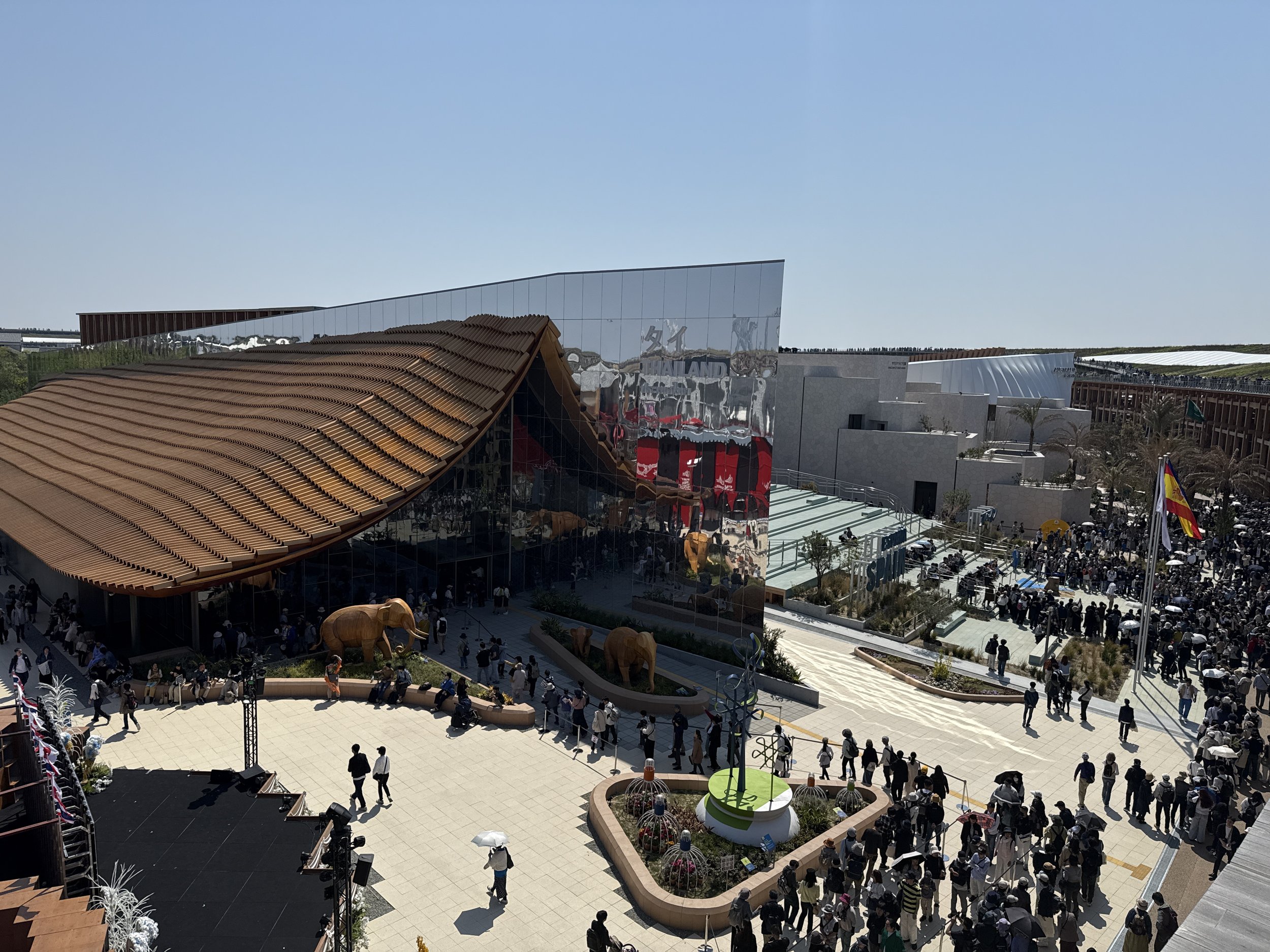
Thailand Pavilion “VIMANA THAI”, designed by Architects 49
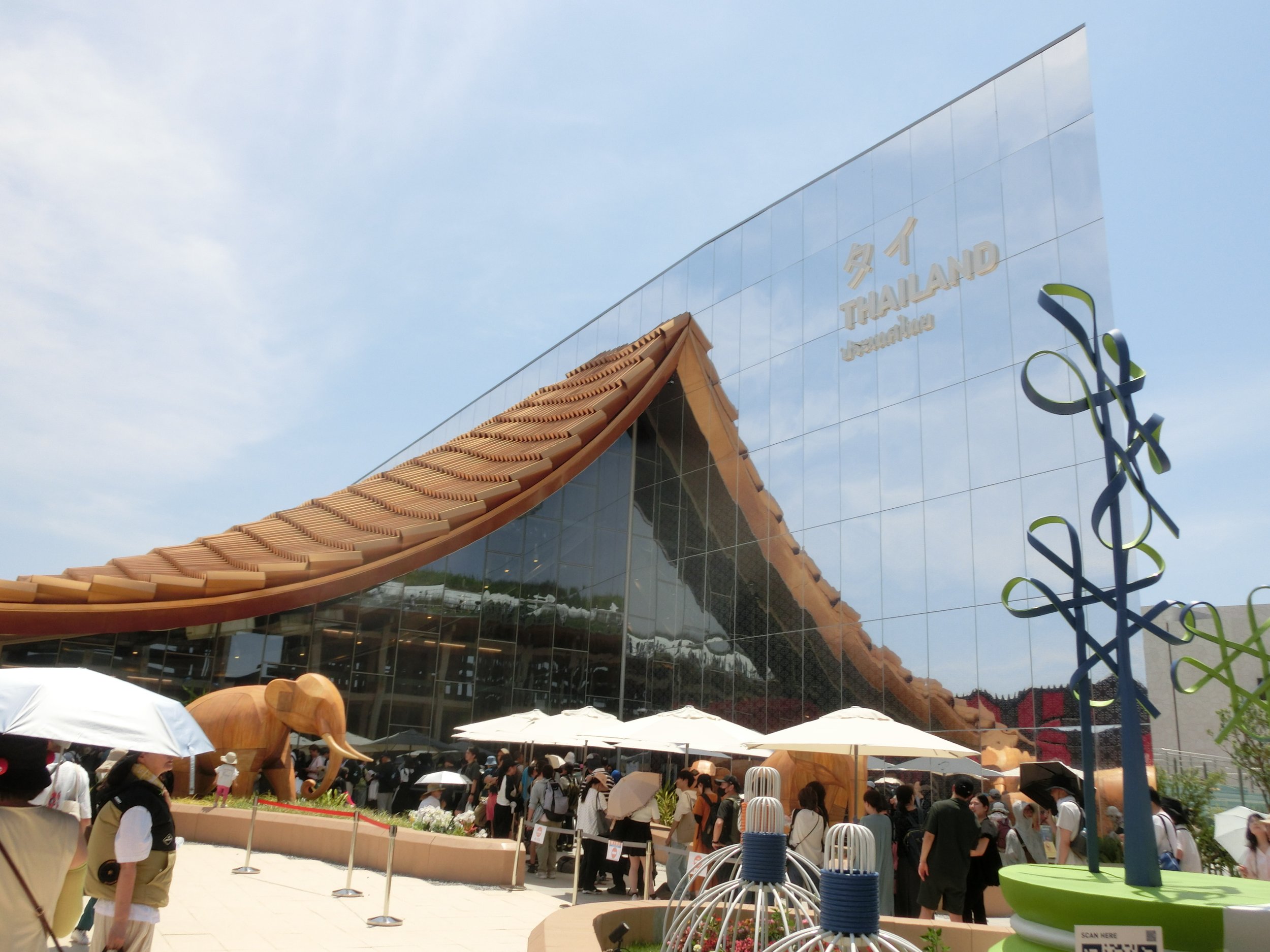
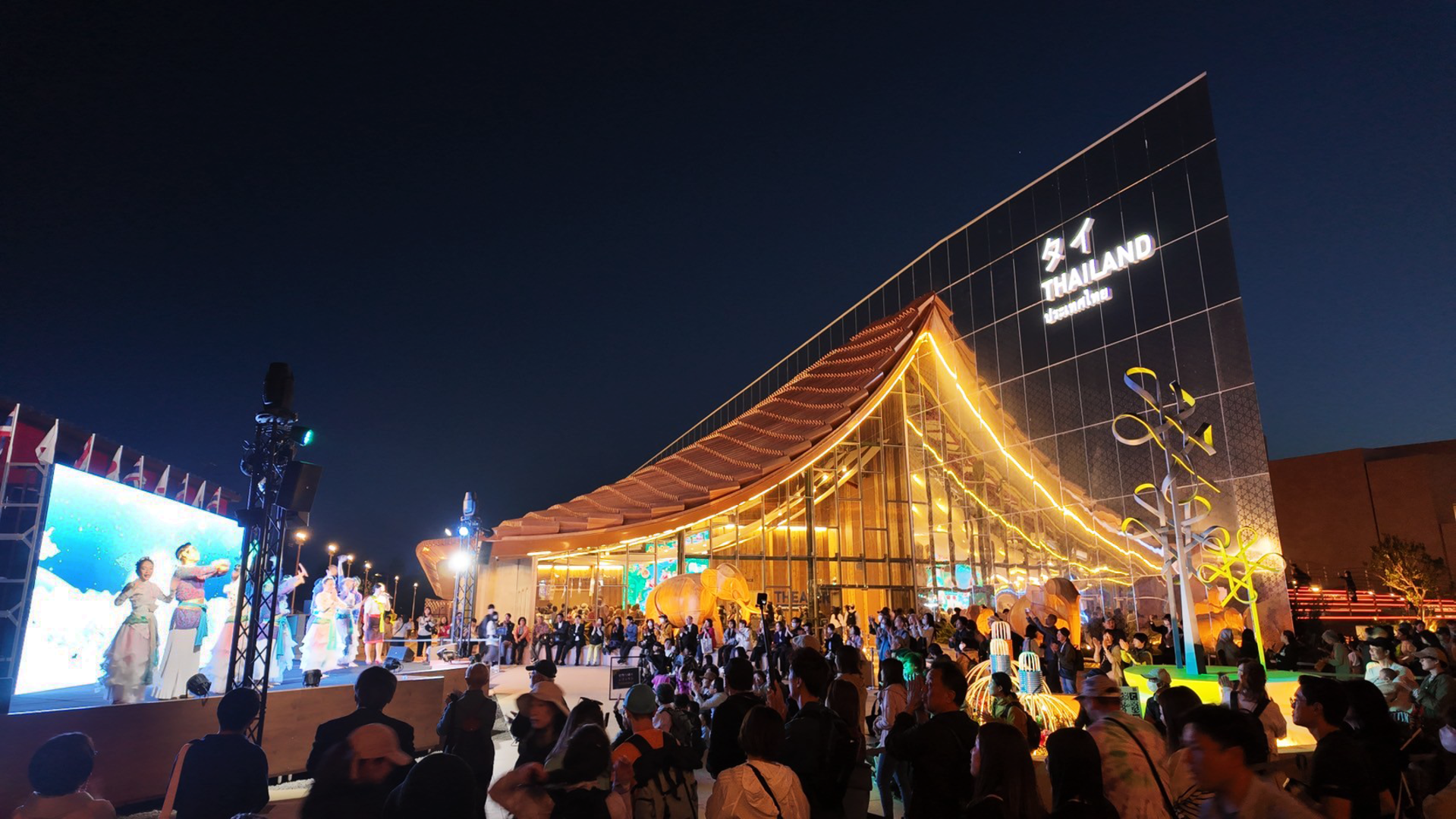
Designed by Architects 49, the Thailand Pavilion “VIMANA THAI”, reinterpreted the traditional Thai Chom Hae gable in a bold, contemporary form. A reflective side wall cleverly created the illusion of a full gabled roof despite the pavilion’s narrow footprint.
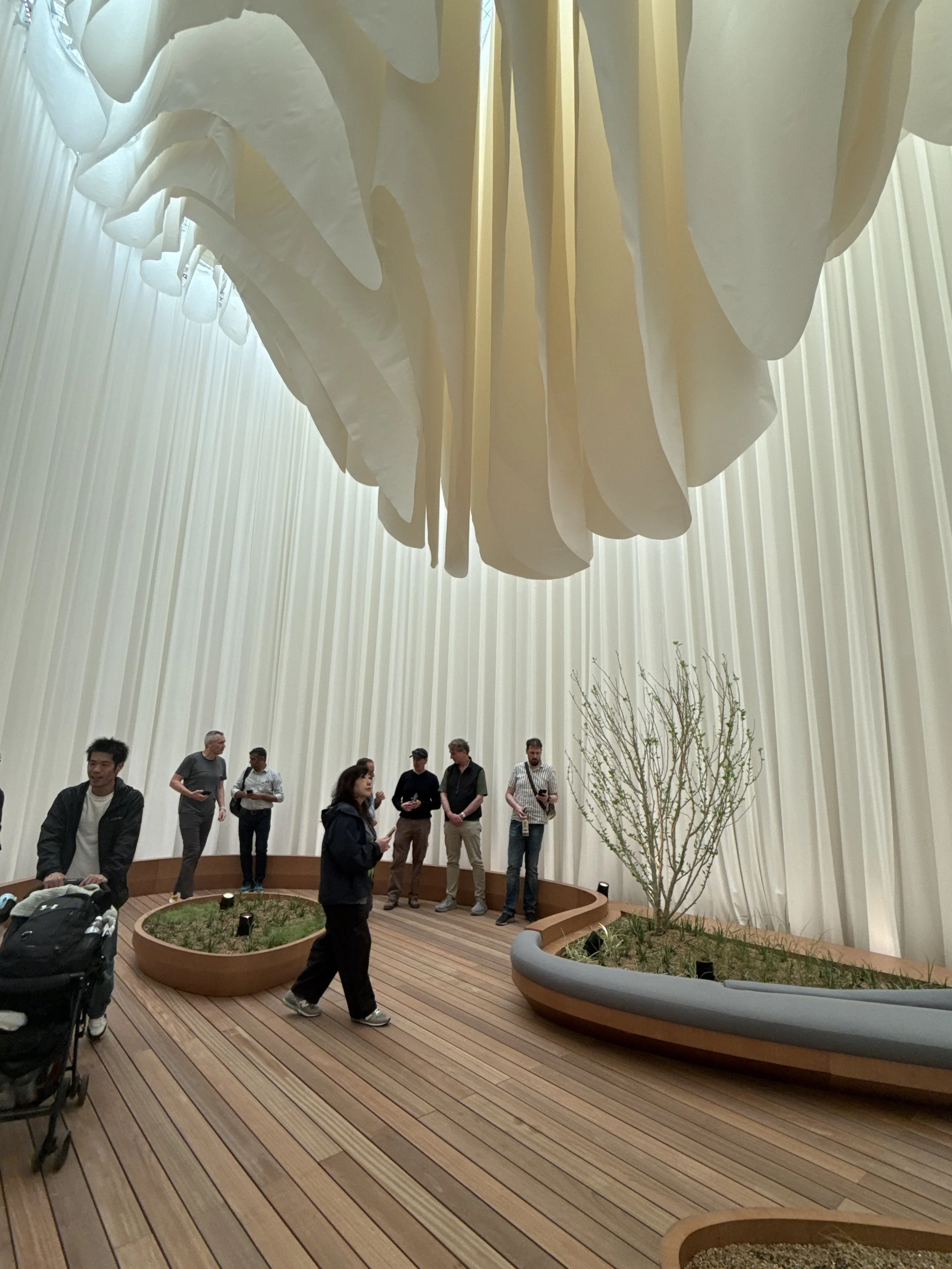
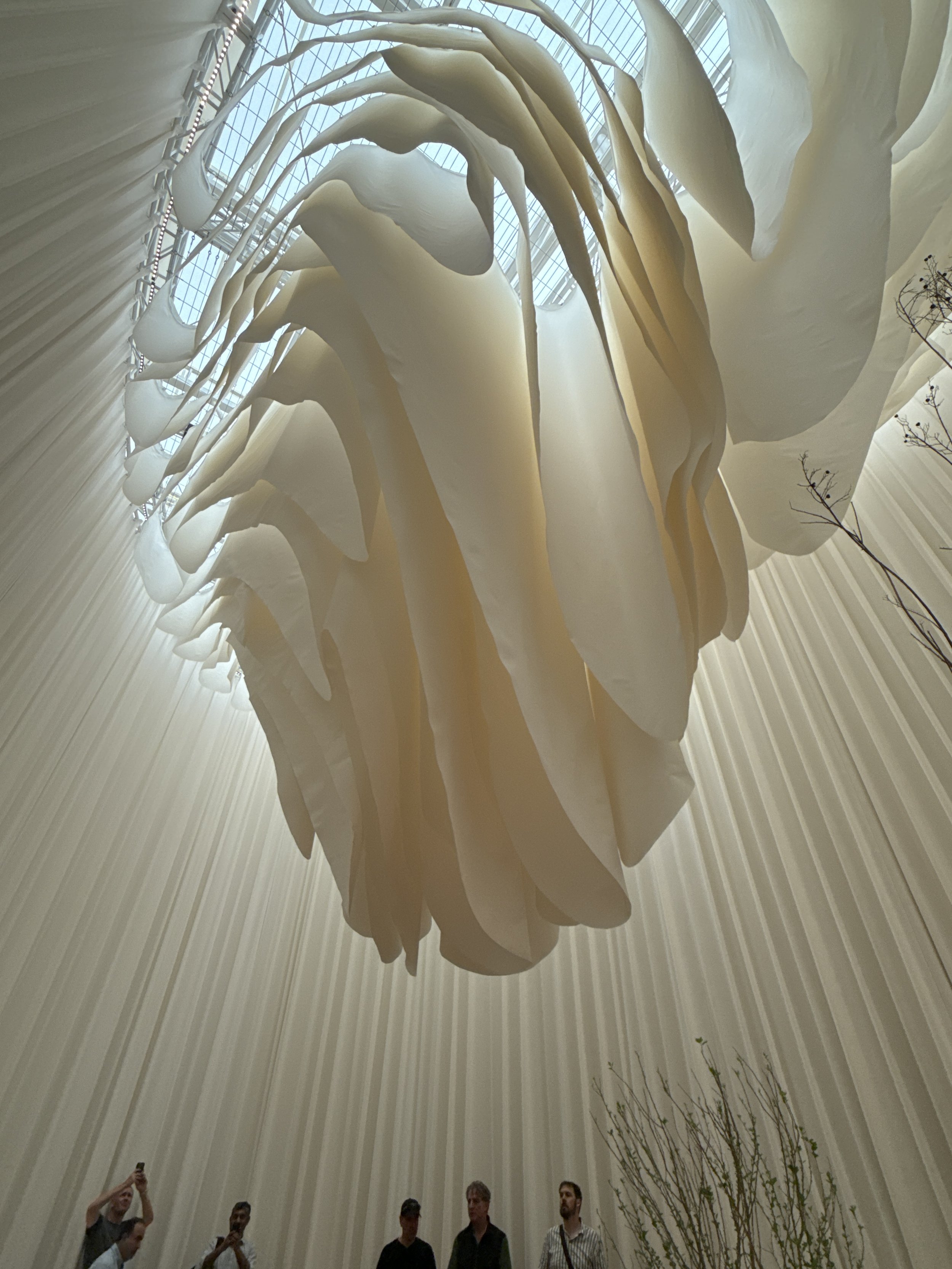
Interior of the Kuwait Pavilion, known as “The Visionary Lighthouse”, designed by Christian Tschersich from LAVA.
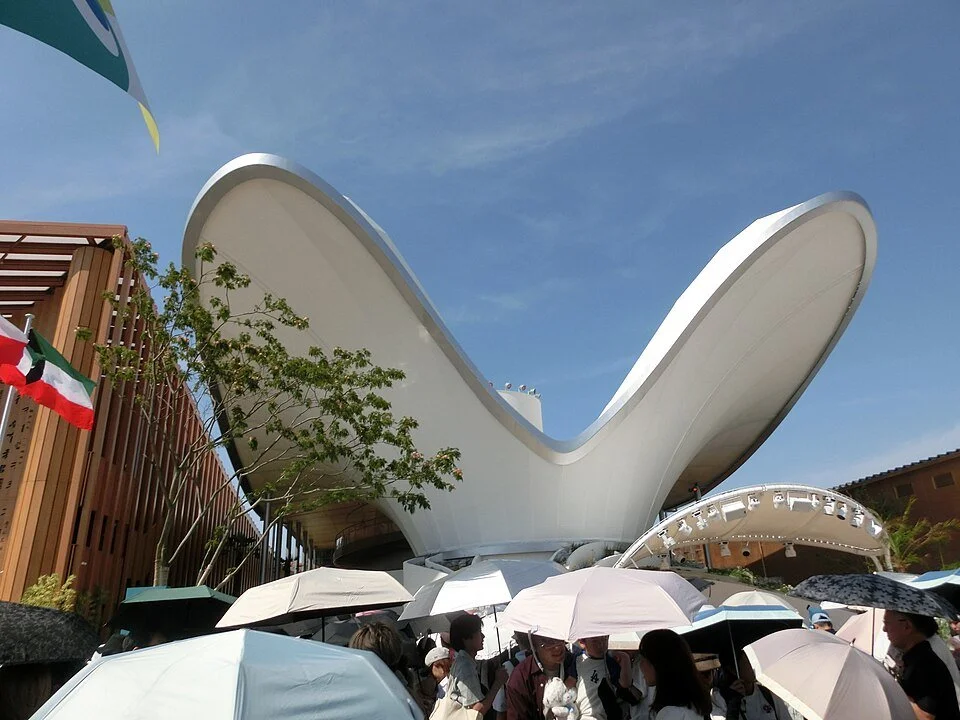
Kuwait Pavilion
“The Visionary Lighthouse” in the Kuwait Pavilion was designed to evoke Kuwait’s coastal desert landscape. This beautiful pavilion features a soaring, wing-shaped roof paired with soft, sculptural interior forms reminiscent of flowing fabric ripples. This sense of movement and openness reflects Kuwait’s longstanding values of welcome and hospitality, while showcasing innovative design and immersive spatial storytelling.
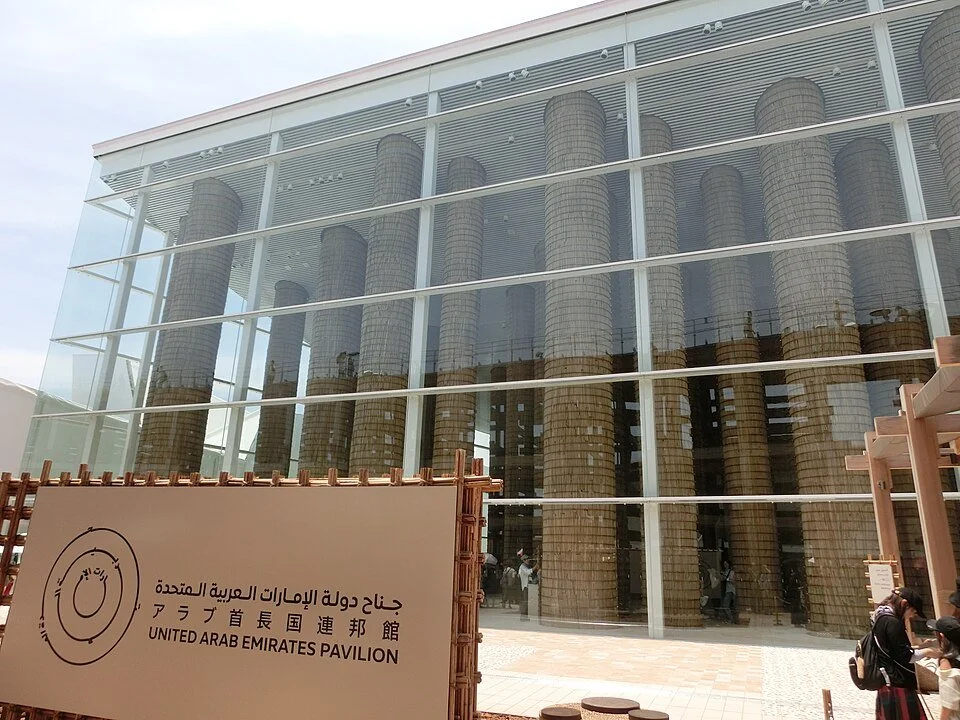
United Arab Emirates Pavilion
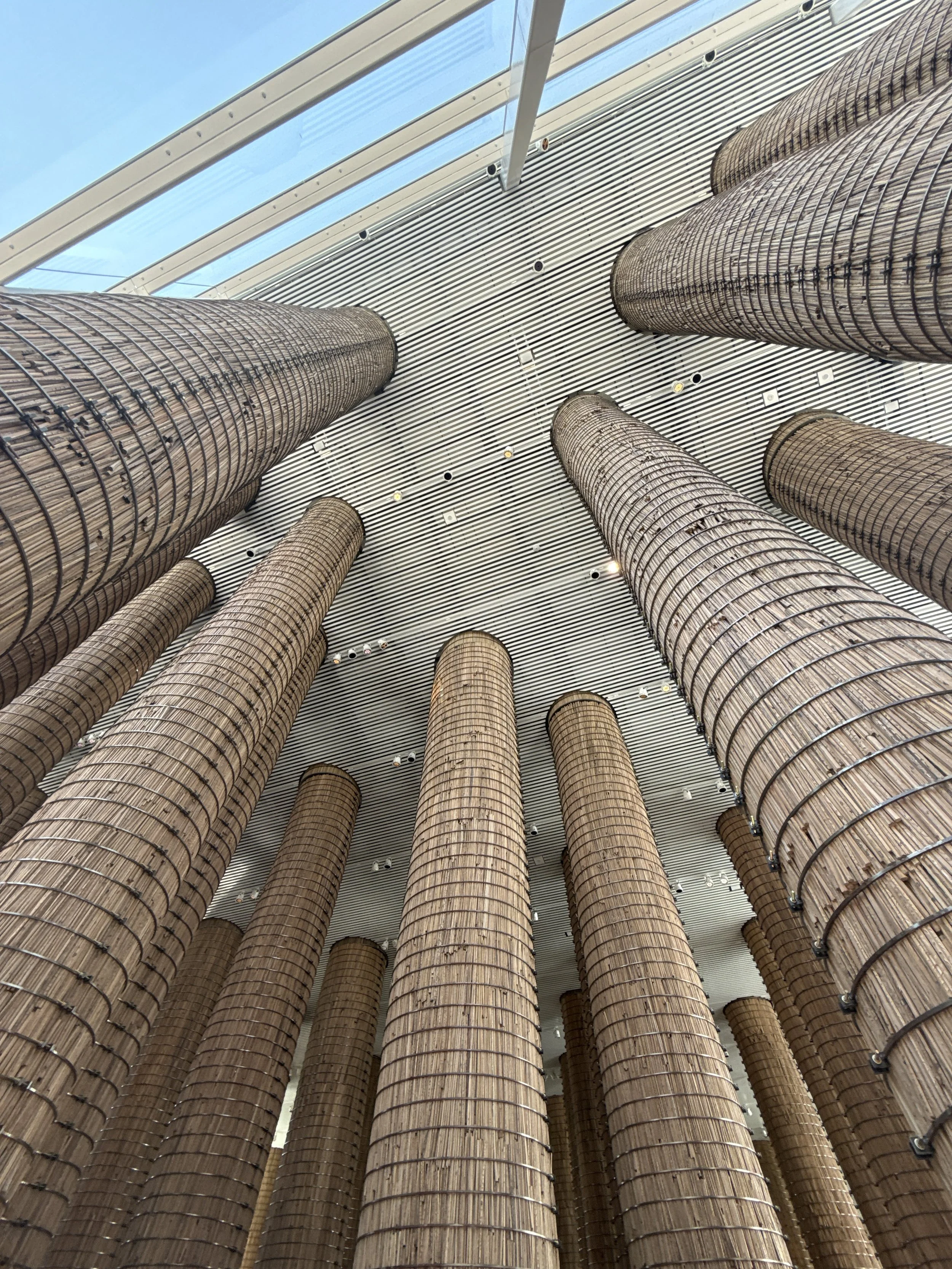
The interior of the UAE Pavilion, designed by Earth to Ether Design Collective
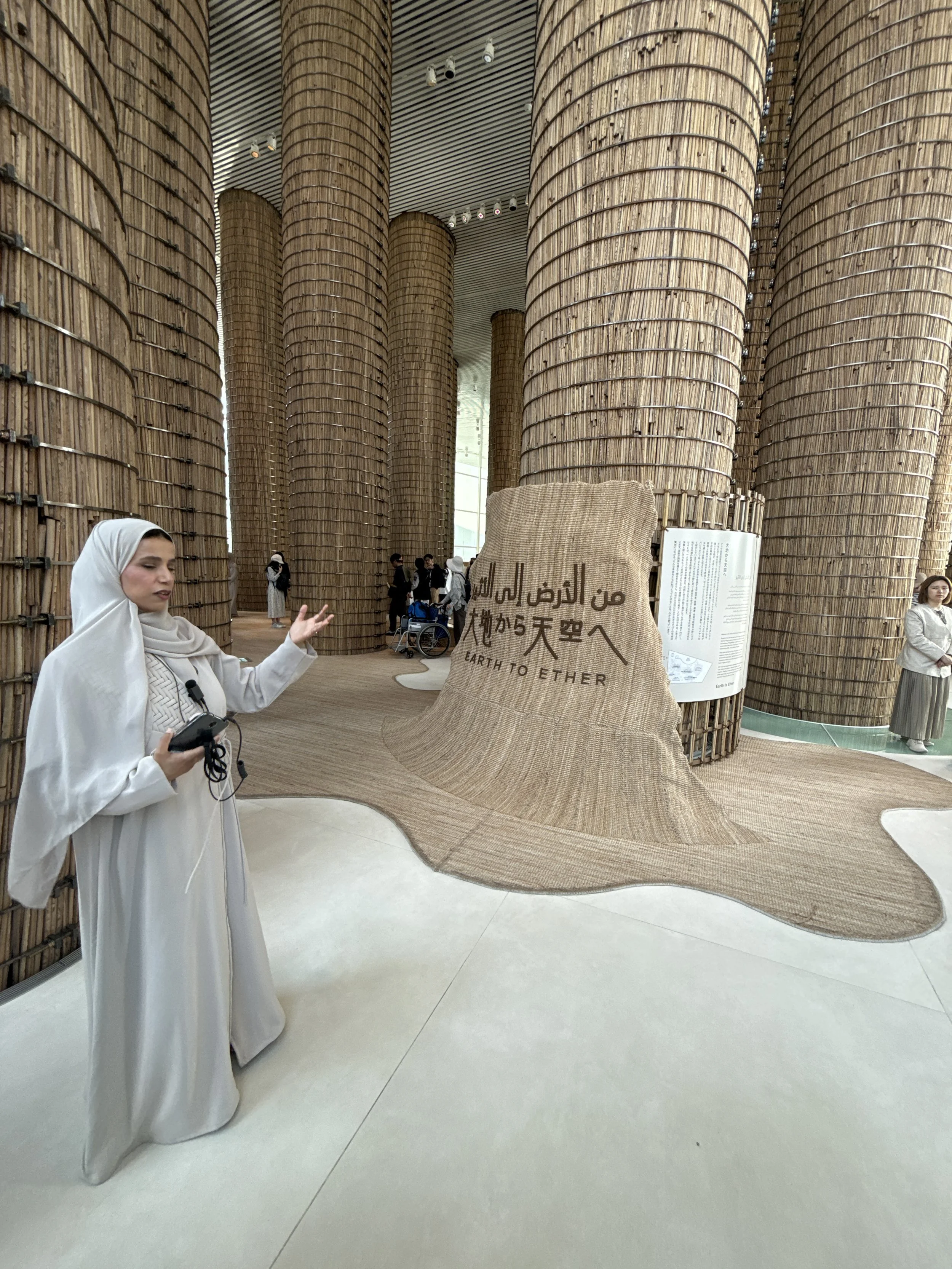
The interior of the United Arab Emirates Pavilion at Expo 2025 Osaka was designed by the Earth to Ether Design Collective, with design leadership from Mariam Al Memari, Shaikha Al Ketbi, Shamma Al Bastaki, and Omar Al Suwaidi, while Atelier Brückner contributed to the exhibition and spatial experience. The ceiling is supported by 90 towering columns crafted from agricultural waste sourced from date palm trees, celebrating sustainable materials and traditional craftsmanship. Incorporating Japan’s renowned woodworking techniques, the design merges innovation with heritage, creating an immersive environment that reflects the UAE’s commitment to sustainability, cultural storytelling, and forward-looking vision. The flowing, open interior symbolizes hospitality, resilience, and the harmonious blending of nature, technology, and human ingenuity.
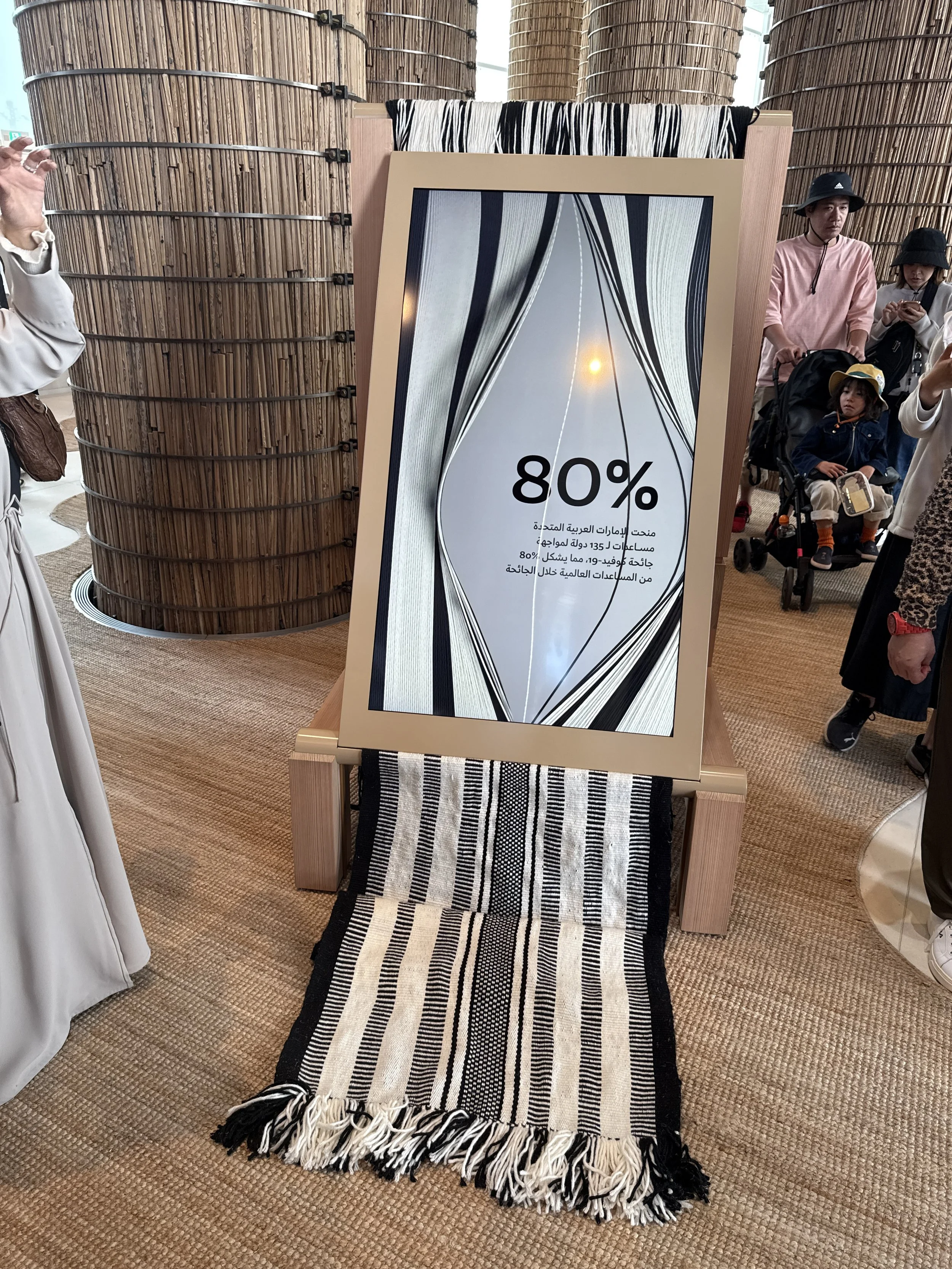
Al Sadu weaving highlights the UAE’s humanitarian efforts during the COVID-19 pandemic.
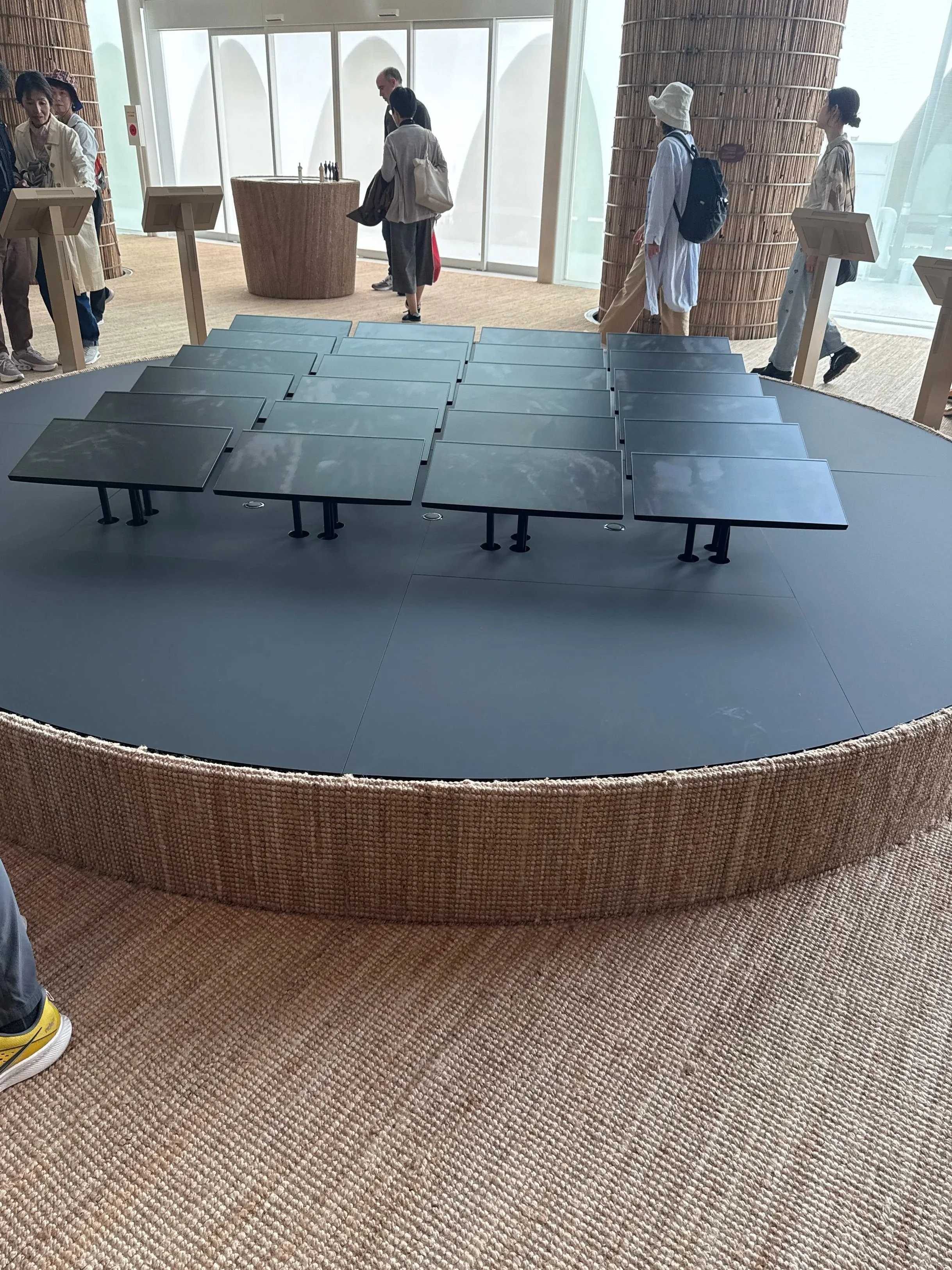
‘“Stewards of Sustainability” zone designed by Atelier Brückner
One of the pavilion’s key exhibits highlighted the UAE’s global humanitarian efforts. Using Al Sadu, the traditional black-and-white striped weaving practiced by Bedouin women across the Arabian Gulf, the display grounded the story of modern aid within a deep cultural lineage. The exhibit revealed how the UAE provided assistance to 135 countries during the COVID-19 pandemic, accounting for 80% of global pandemic aid. By pairing this traditional craft with contemporary storytelling, the pavilion reinforced its overarching message of innovation, heritage and international responsibility. Also presented, were the “Stewards of Sustainability” zone which featured a kinetic solar-panel installation. These are composed of 24 tilting and shifting screens that echo the movement of the sun and symbolise renewable energy in action. Designed by Atelier Brückner (as part of Earth to Ether Design Collective), the installation transforms static information into a living display, inviting visitors to experience sustainability as an active, dynamic force rather than a passive concept.
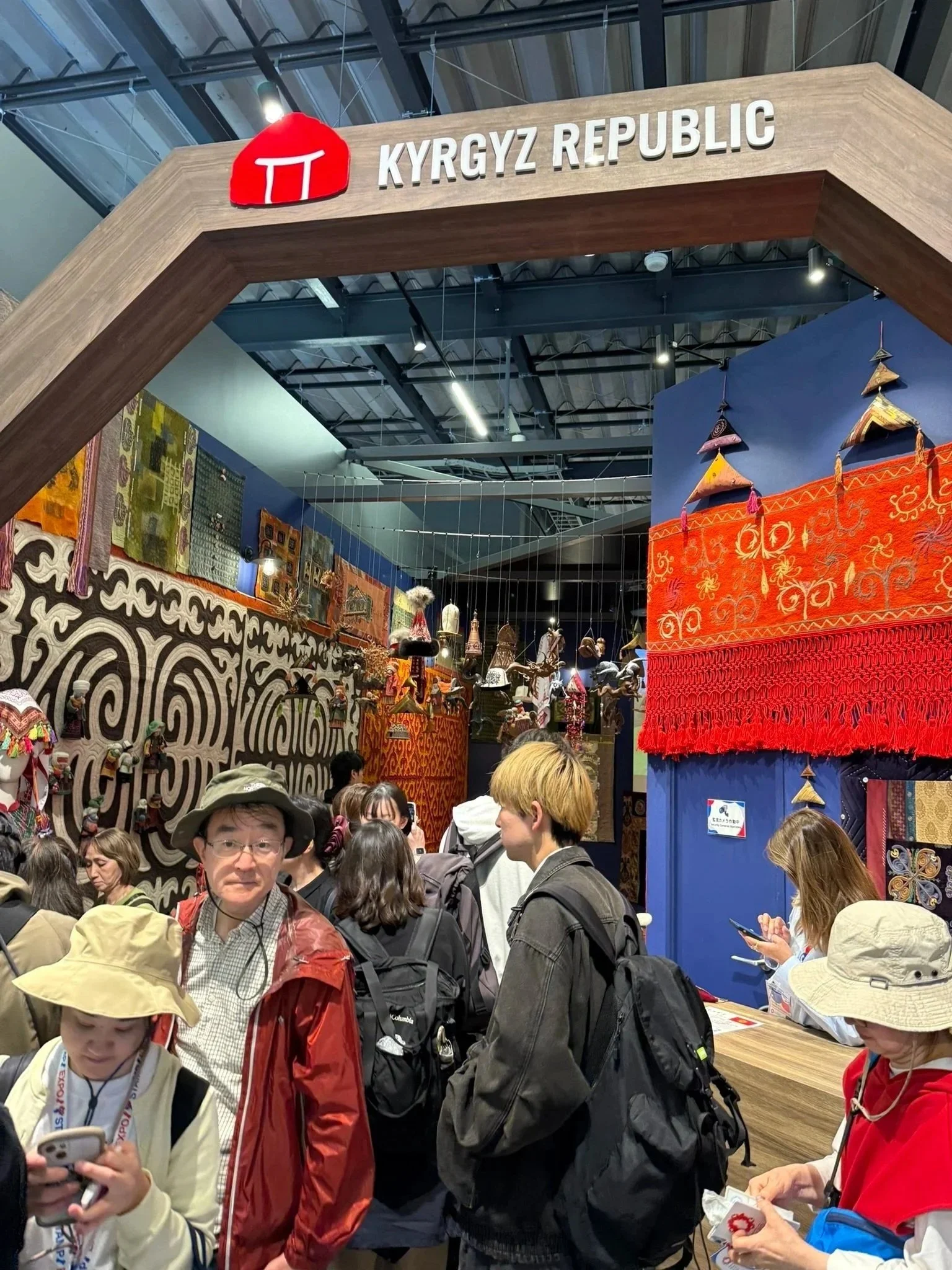
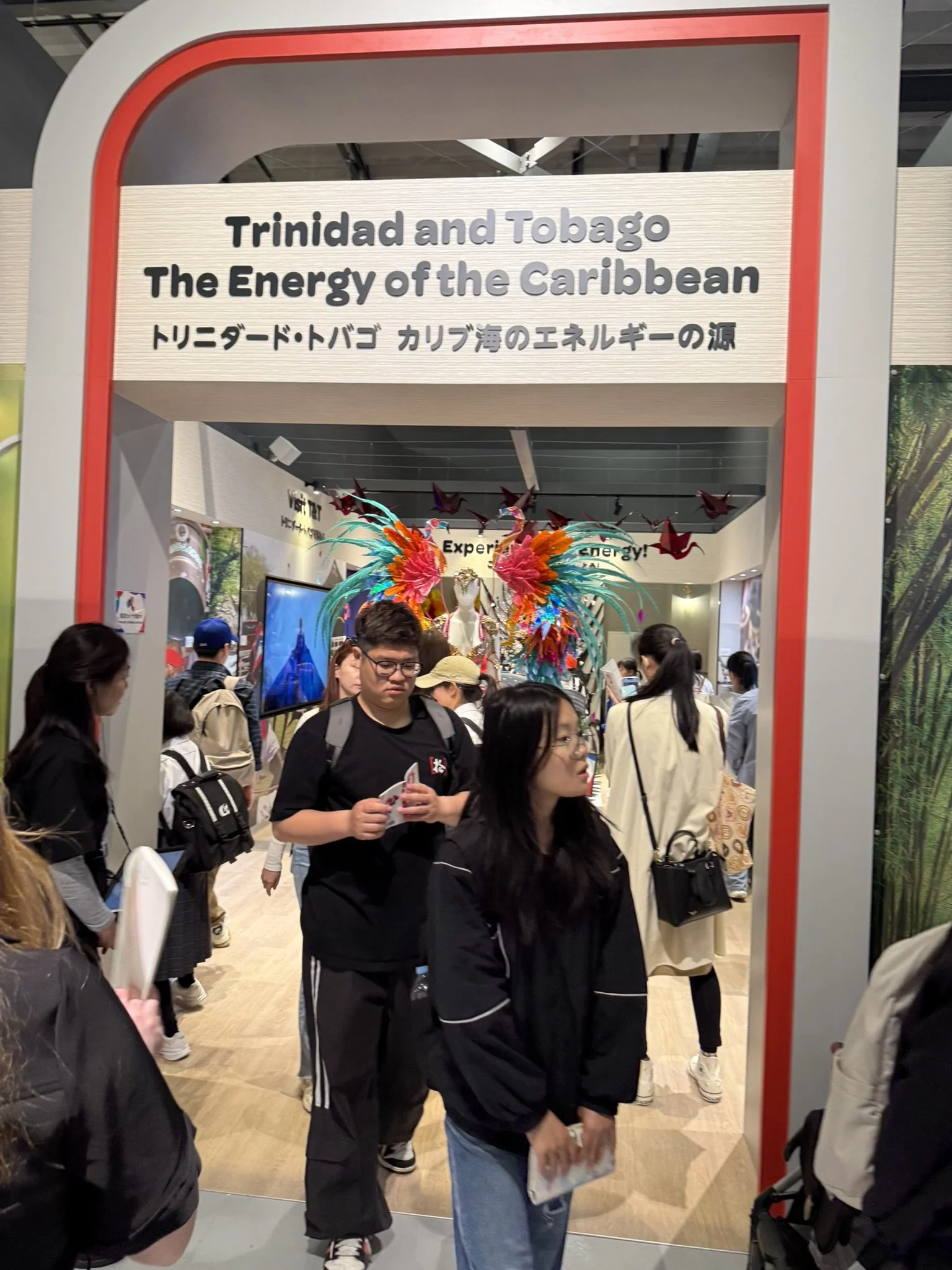
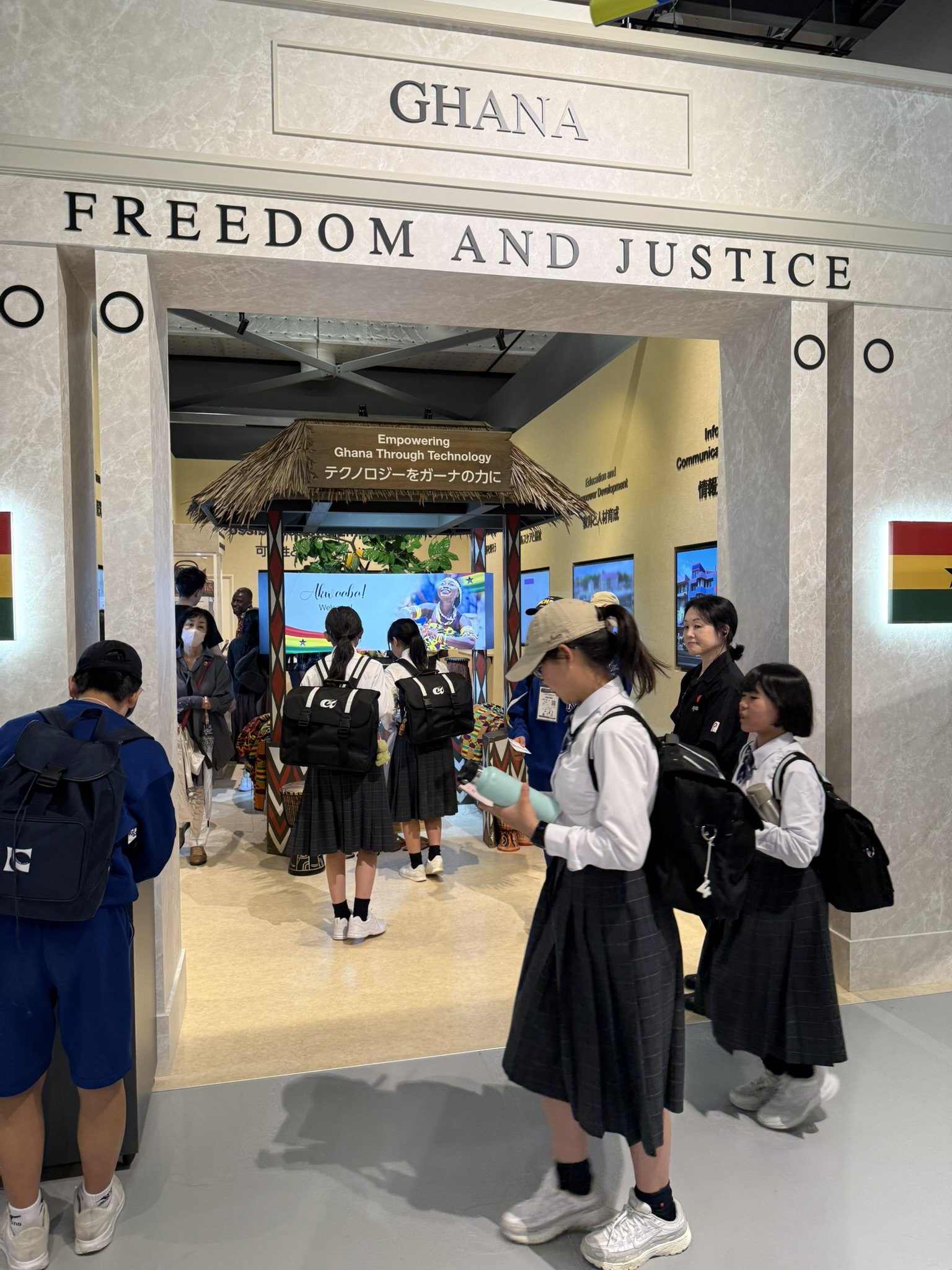
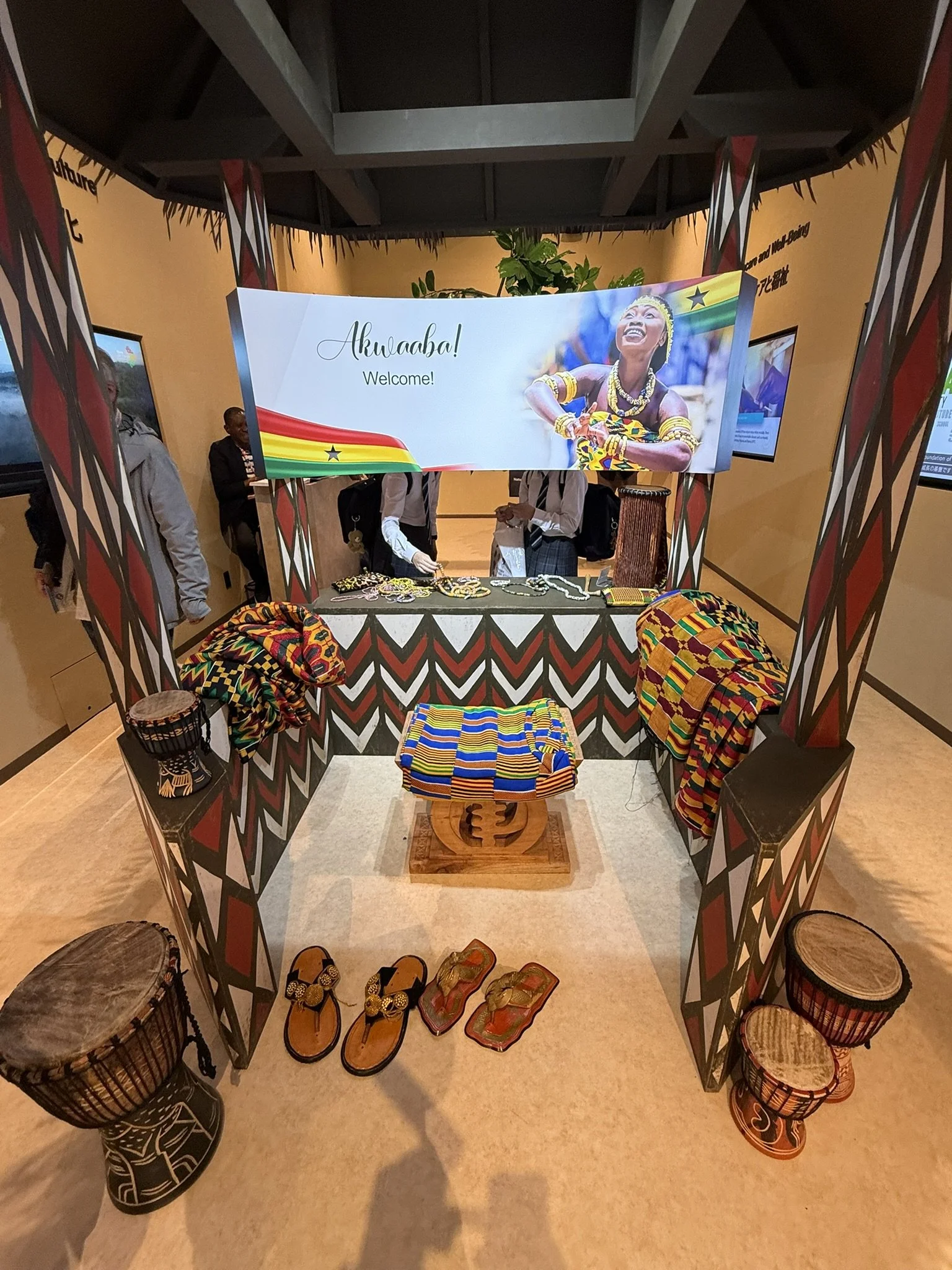
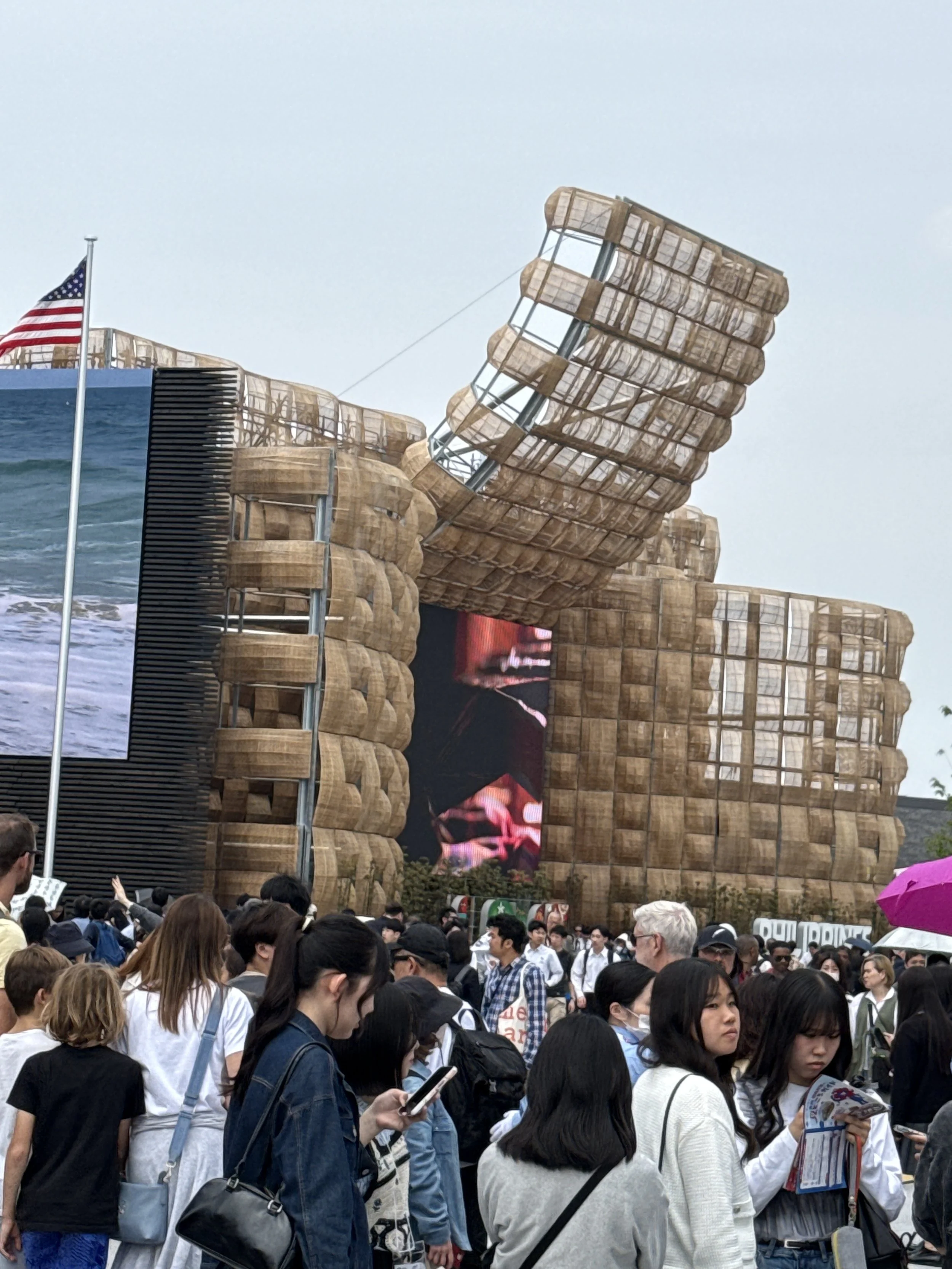
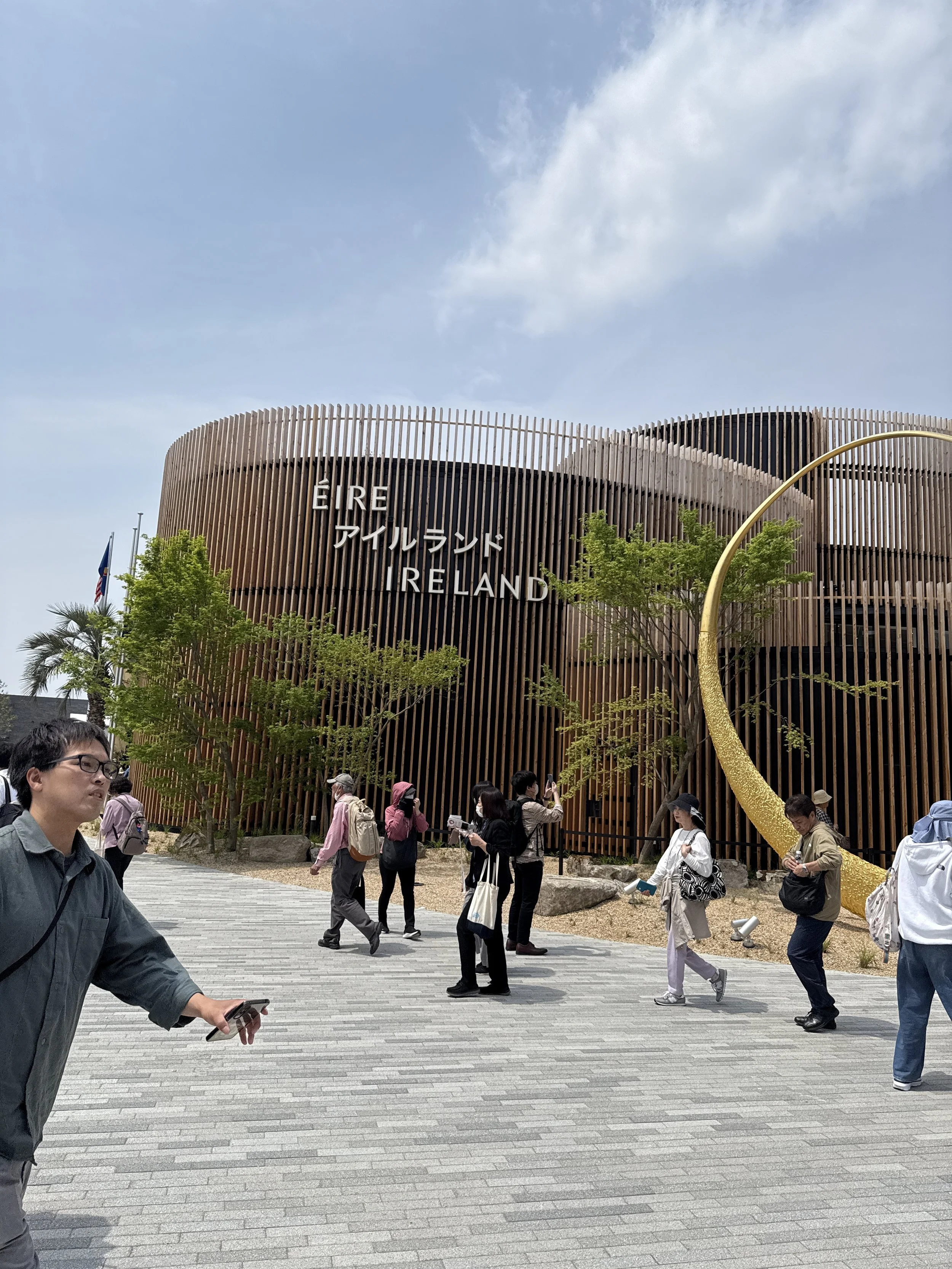
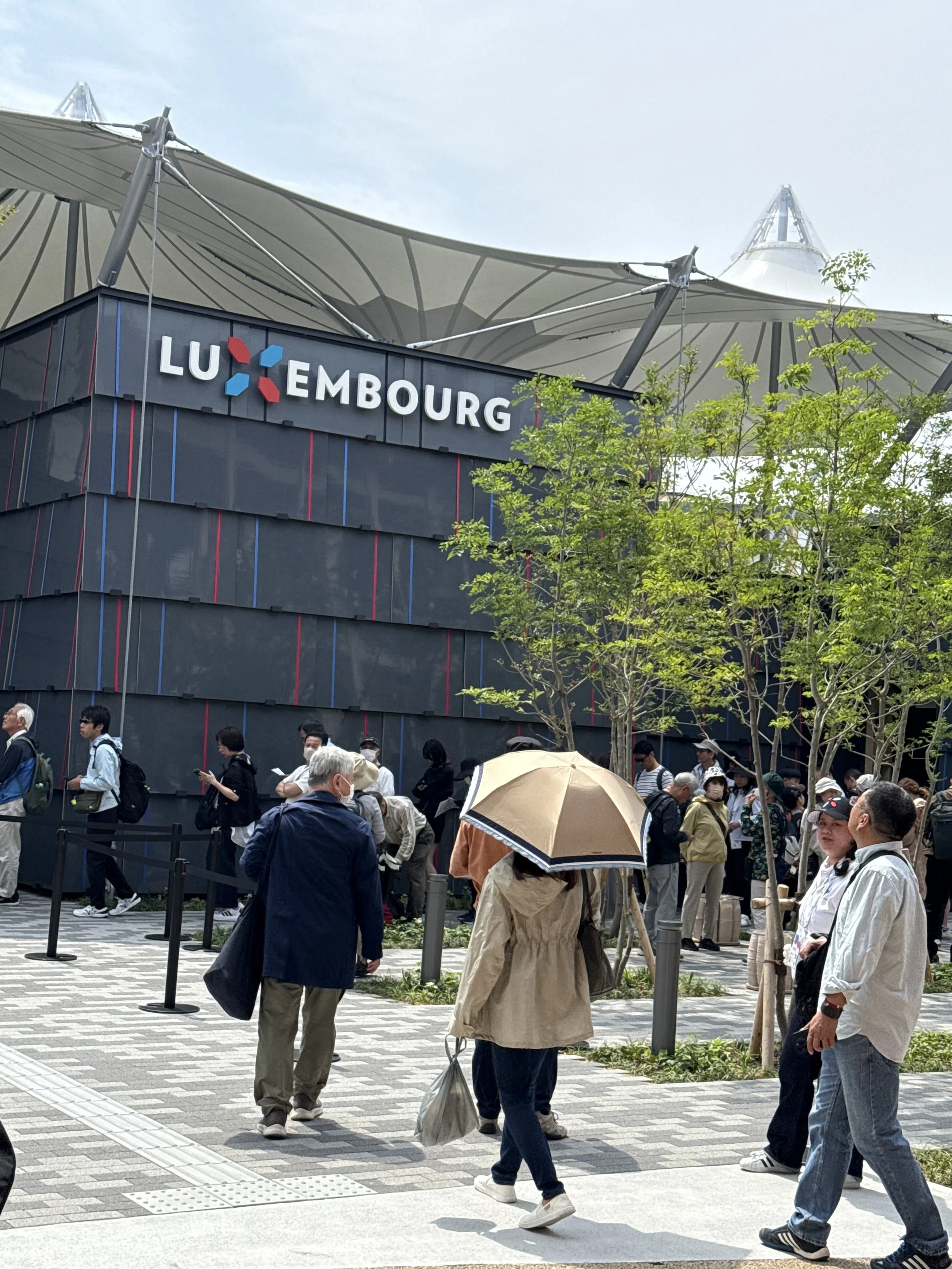
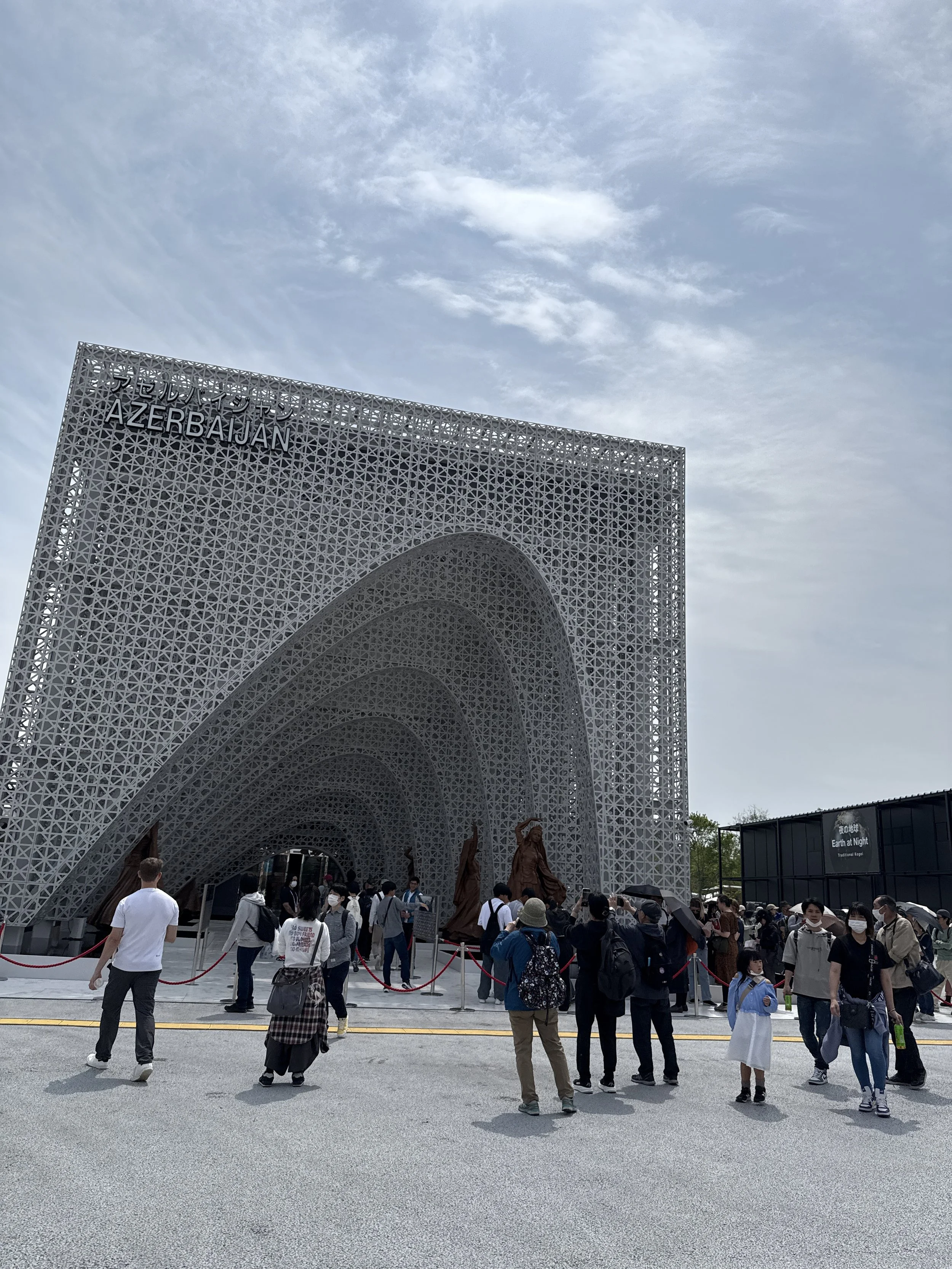
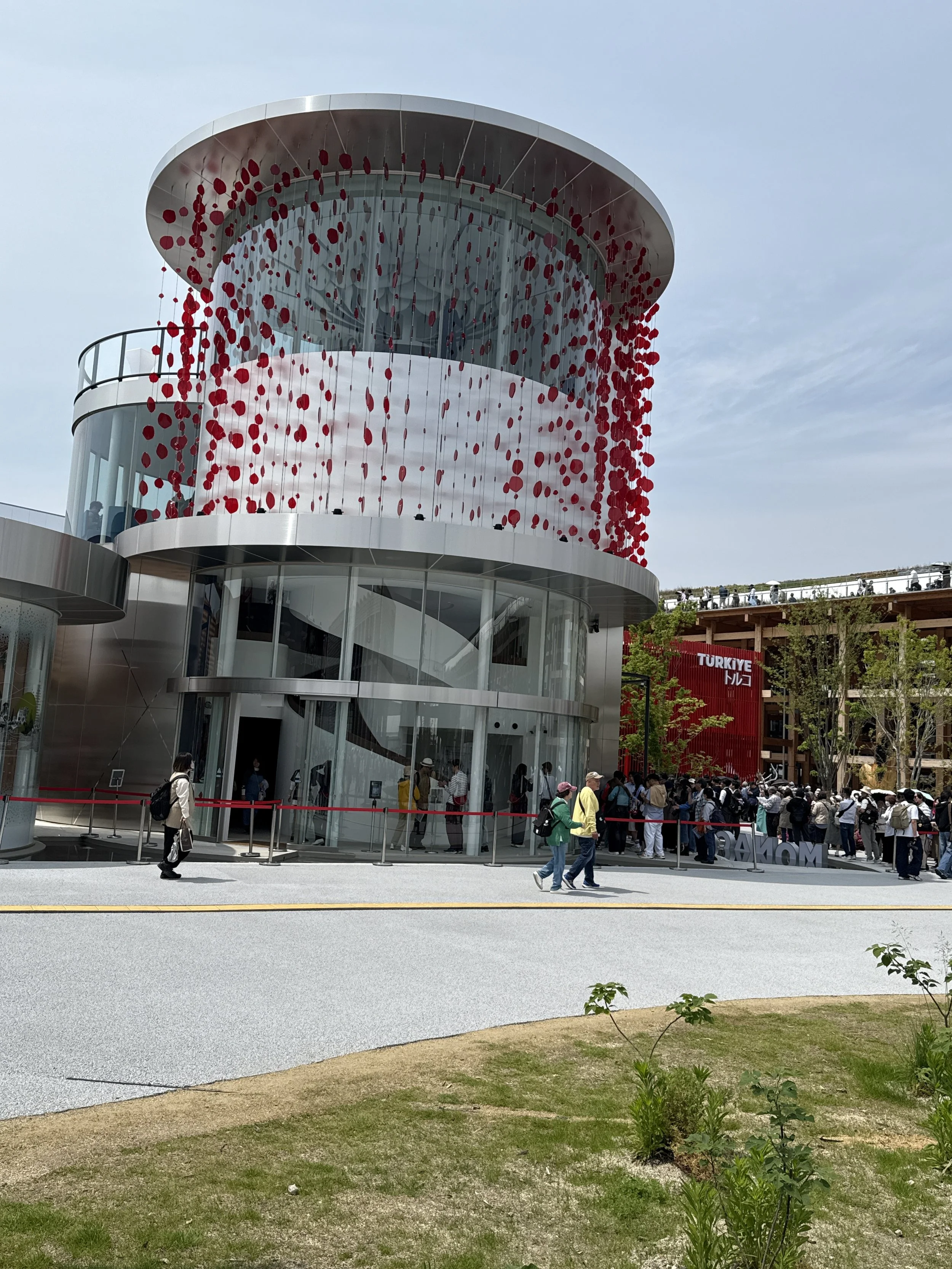
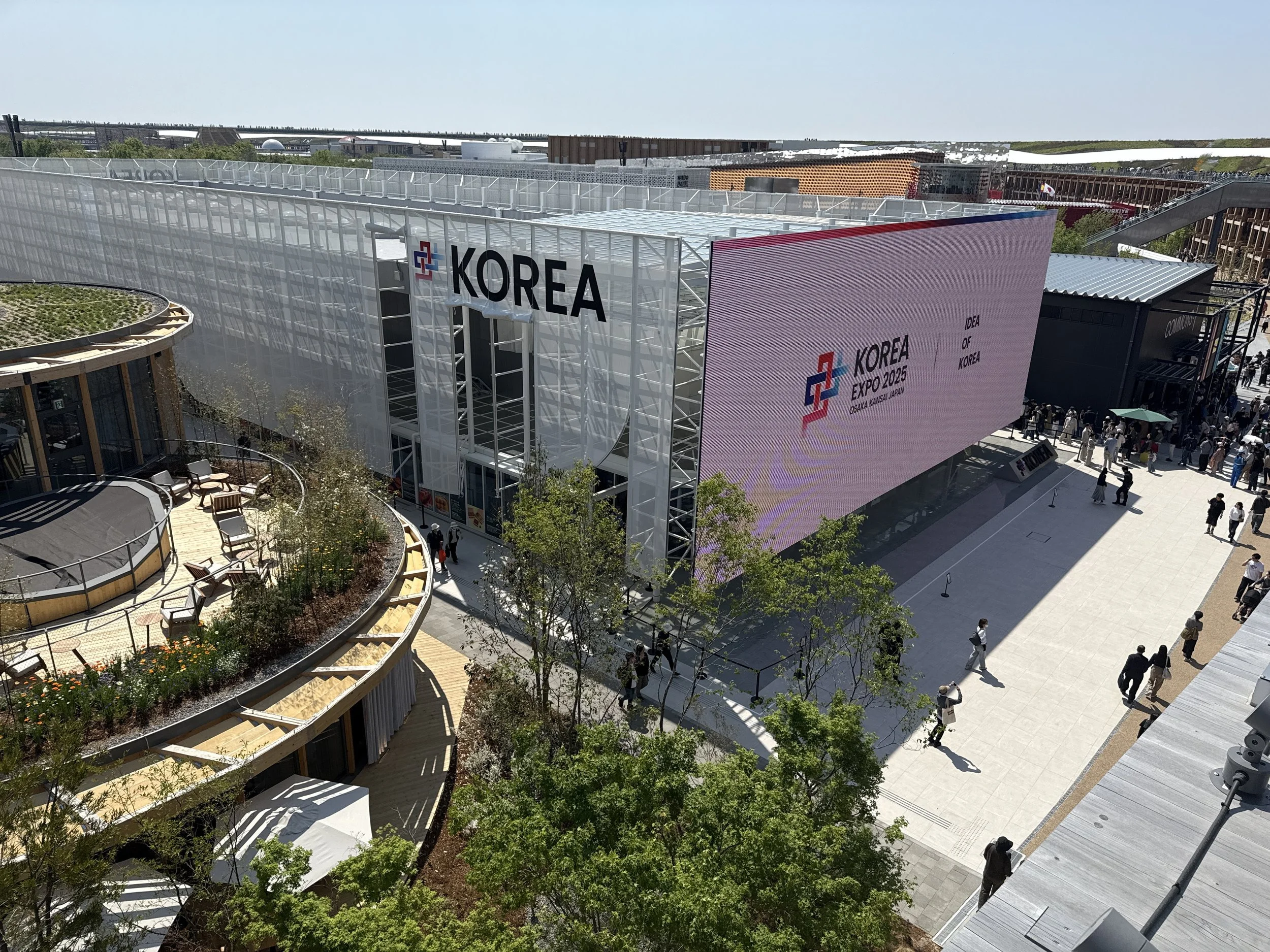
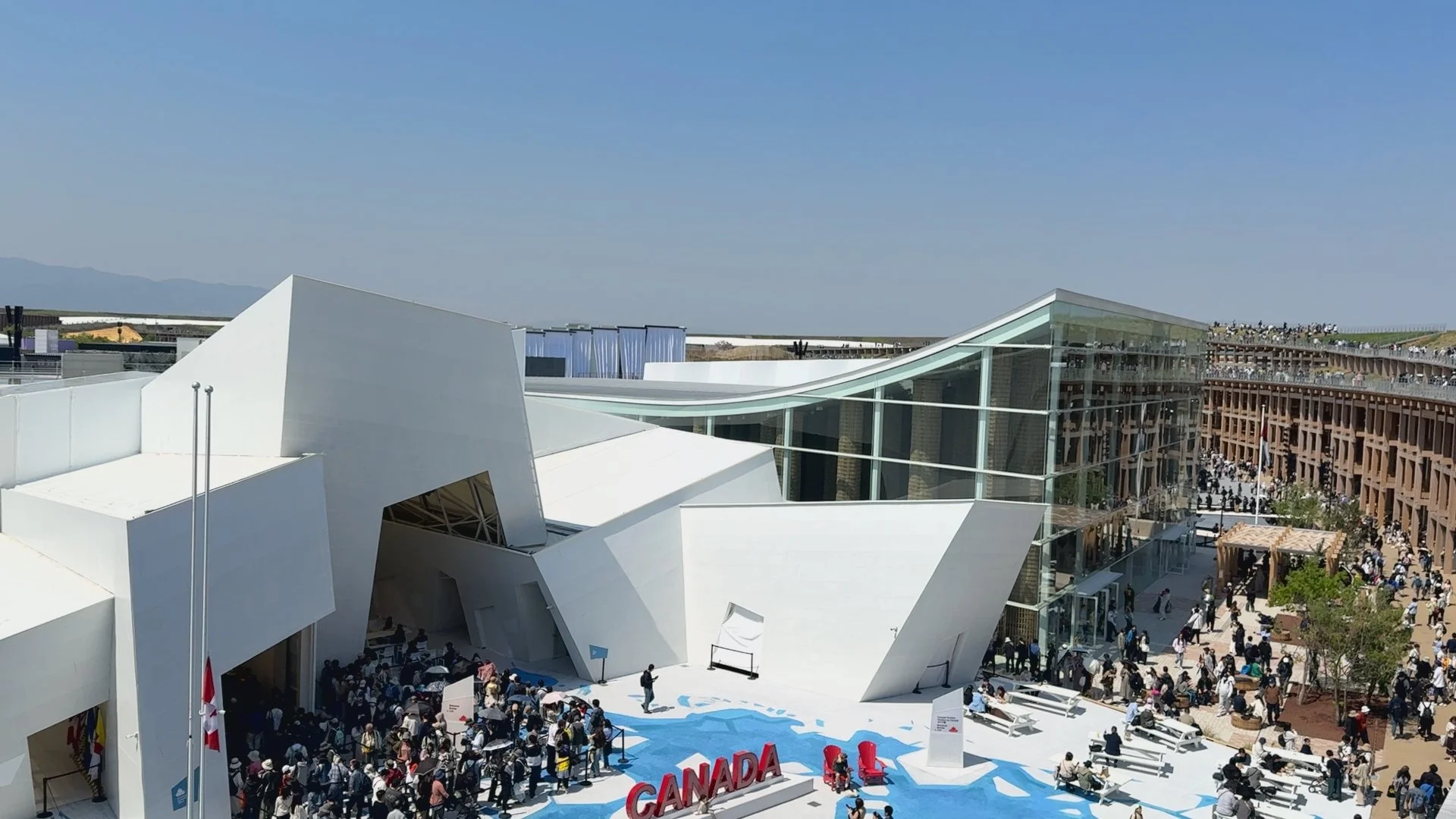
The Commons Pavilions were particularly interesting, bringing together multiple countries in a booth-style format. Jared spent some time in Commons A, which featured nations such as the Kyrgyz Republic, the Caribbean, Tonga, Eswatini, and Ghana — his home country.
Reflecting on his visit, Jared said: “What I appreciated about the Commons pavilions was the opportunity to interact with people. The booths were small, so they could only display a handful of objects and information. The staff on duty helped fill in the gaps. While exhibitions today often move toward self-guided experiences through graphics and digital screens, there was something really special about speaking to a real person who is also a native of the country.”
Looking Ahead
For our own work in the cultural and heritage sector, the Expo reinforced that museums, galleries and public cultural spaces are essential to civic life, and must continue to evolve to remain socially impactful.
Expo 2025 Osaka was a timely reminder that cultural infrastructure is more than construction. It’s about shaping places that bring people together, strengthening identity and supporting better futures.
We’re proud to keep playing our part in that mission, by helping to create spaces that connect, empower and celebrate lives, here in the UK and internationally.
“Learning about innovative designs and new trends in the culture sector has always been one of my passions.
It is not very often that one gets the opportunity to see such a wide variety of architectural forms and visitor experiences in one place.
Expo 2025 Osaka was a great platform to explore and feed this passion. As a visitor, one key lesson for me was that the social impact of cultural destinations is sometimes underestimated.
Museums and visitor attractions should be encouraged to make social value one of the core principles informing the design and management of projects.”